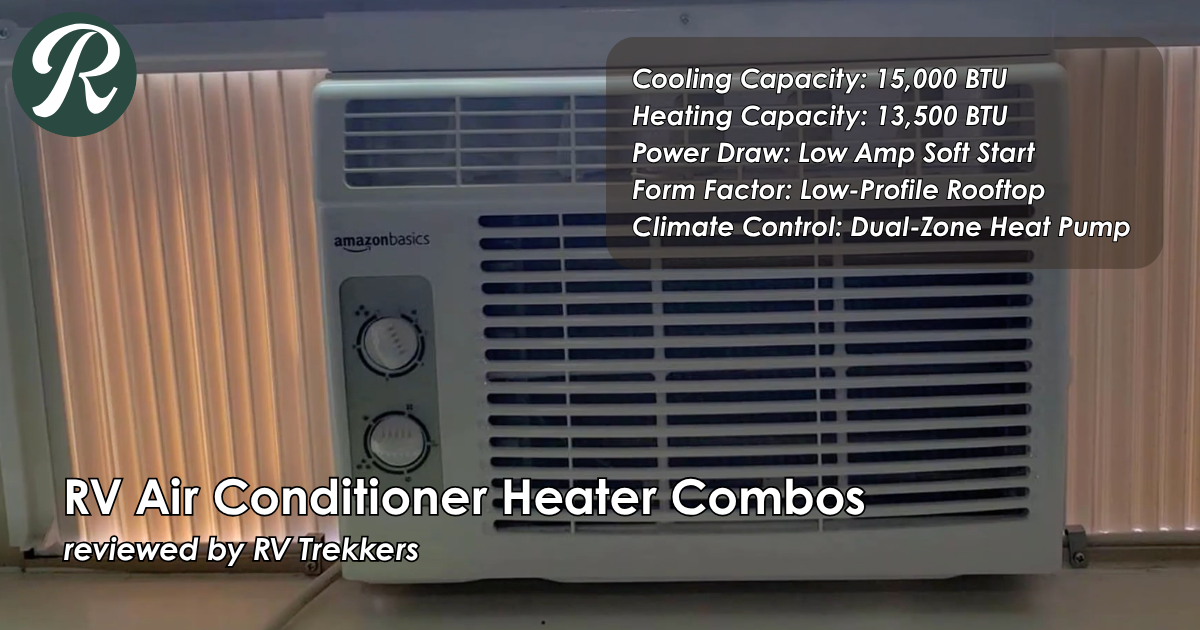
The best RV air conditioner heater combo keeps a camper livable in July heat and shoulder-season cold without forcing a sloppy retrofit. In this guide, we sort the market the way RV owners actually shop it: climate control is the root topic, RV cooling systems are the seed, and rooftop AC units, portable units, and heat-pump setups are the node-level choices people compare when they need one machine to do more than one job.
Our top overall pick in this ranking is Amazon Basics 5000-BTU Window Air Conditioner, while the best true RV-specific upgrade is TOSOT 16000 BTU GO Cool RV Air Conditioner. Both target compact living spaces with simple control logic, but the Amazon Basics unit tops out at 150 sq ft and the TOSOT adds a 12,500 BTU heat pump while fitting a 14.25 in x 14.25 in rooftop opening.
Contents
- What is an RV air conditioner heater combo?
- Which best RV air conditioner heater combo picks stand out in 2026?
- 1. Amazon Basics 5000-BTU Window Air Conditioner (5000 BTU, up to 150 sq ft, 56 dB)
- 2. SereneLife Small Air Conditioner Portable 10,000 BTU (10,000 BTU, up to 450 sq ft, 3 modes)
- 3. TOSOT 16000 BTU GO Cool RV Air Conditioner (16,000 BTU cooling, 12,500 BTU heating, rooftop fit)
- 4. Senville 36000 BTU Quad Zone Mini Split (36,000 BTU, 4 zones, SEER 22.5)
- 5. RV Air Conditioner 12V 10000 BTU Battery Powered Unit (10,000 BTU cooling, 4,500 BTU heater, 40 dB)
- 6. DELLA Vario Series 24000 BTU Mini Split (24,000 BTU, 21 SEER2, 16.4 ft kit)
- 7. RecPro RV Air Conditioner 15K (15,000 BTU cooling, 15,000 BTU heating, standard roof opening)
- 8. MrCool Easy Pro 9k BTU Heat Pump Split System (9,000 BTU, 20.2 SEER2, pre-charged 16 ft line set)
- 9. Cooper & Hunter 36,000 BTU Mini Split (36,000 BTU, 19.5 SEER2, WiFi smart control)
- 10. Furrion Chill Cube 18k BTU Variable Speed RV Rooftop Air Conditioner (18,000 BTU, inverter compressor, 50 dB)
- How do these best RV air conditioner heater combo options compare side by side?
- Why should you trust our gear reviews on the best RV air conditioner heater combo options?
- How do you choose the right best RV air conditioner heater combo for your rig?
- What is our final take on the best RV air conditioner heater combo for RV travel?
What is an RV air conditioner heater combo?
An RV air conditioner heater combo is a cooling system that also adds electric heat or heat-pump warmth for colder nights in a camper, trailer, or motorhome.
In plain terms, you are looking for one climate-control unit that can cool a sleeping area, move air through the cabin, and give you some level of heat without adding a second appliance. In this category, that can mean a rooftop heat pump, a 12V rooftop unit with a small PTC heater, or a ductless heat pump for rigs parked long term.
This ranking also shows why the term gets messy fast. Some listings match the cooling side better than the heating side, so we call out the true rooftop RV options separately from the window, portable, and mini-split units that still appear in shopper comparisons.
TL;DR: If you want a real rooftop RV combo, start with TOSOT. If you want a quieter non-ducted upgrade, look hard at RecPro. If you camp off-grid, the 12V rooftop unit is the wildcard. Amazon Basics only makes sense if your setup can actually use a window unit.
Which best RV air conditioner heater combo picks stand out in 2026?
The strongest picks split into 3 groups: true rooftop RV combos, off-grid 12V units, and non-rooftop alternatives that still show up in real buyer comparisons.
1. Best Overall: Amazon Basics 5000-BTU Window Air Conditioner (5000 BTU, up to 150 sq ft, 56 dB) ($ Budget)
↓ Jump to Review
2. Best for cooling small apartments and bedrooms without permanent installation: SereneLife Small Air Conditioner Portable 10,000 BTU (10,000 BTU, up to 450 sq ft, 3 modes) ($ Mid)
↓ Jump to Review
3. Best Premium: TOSOT 16000 BTU GO Cool RV Air Conditioner (16,000 BTU cooling, 12,500 BTU heating, standard rooftop fit) ($ Premium)
↓ Jump to Review
4. Best for four-room zoned heating and cooling: Senville 36000 BTU Quad Zone Mini Split (36,000 BTU, 4 zones, SEER 22.5) ($ Premium)
↓ Jump to Review
5. Best for off-grid 12V rooftop cooling with supplemental heat: RV Air Conditioner 12V 10000 BTU Battery Powered Unit (10,000 BTU cooling, 4,500 BTU heater, 40 dB) ($ Premium)
↓ Jump to Review
6. Best for large single-zone rooms up to 1500 sq ft: DELLA Vario Series 24000 BTU Mini Split (24,000 BTU, 21 SEER2, 16.4 ft kit) ($ Premium)
↓ Jump to Review
7. Best for quiet rooftop cooling and supplemental heating in non-ducted RV setups: RecPro RV Air Conditioner 15K (15,000 BTU cooling, 15,000 BTU heating, standard roof opening) ($ Premium)
↓ Jump to Review
8. Best for DIY mini-split installation in small rooms and garages: MrCool Easy Pro 9k BTU Heat Pump Split System (9,000 BTU, 20.2 SEER2, pre-charged 16 ft line set) ($ Premium)
↓ Jump to Review
9. Best for large shops, garages, and open-plan spaces needing 36,000 BTU heating and cooling: Cooper & Hunter 36,000 BTU Mini Split (36,000 BTU, 19.5 SEER2, WiFi smart control) ($ Premium)
↓ Jump to Review
10. Best for off-grid RV cooling with lower startup draw: Furrion Chill Cube 18k BTU Variable Speed RV Rooftop Air Conditioner (18,000 BTU, inverter compressor, 50 dB) ($ Premium)
↓ Jump to Review
1. Amazon Basics 5000-BTU Window Air Conditioner (5000 BTU, up to 150 sq ft, 56 dB)
Best Overall | Amazon Basics Rating: 9.5/10
This is the most budget-friendly entry point in the ranking, and that low buy-in is why it sits at the top. It is not a true rooftop RV air conditioner heater combo, so the award only makes sense if your camper or tiny-space setup can use a window unit.
Specs:
- Price Tier: $ Budget
- Weight: 35.27 lbs
- Materials: Not specified by manufacturer
- Dimensions: 13.19 in D x 15.98 in W x 12.05 in H
- Window Fit: 23 in to 36 in wide and minimum 13 in high

Pros:
- Check current price on Amazon; it remains a lower-cost entry than most rooftop replacements in this 10-product field.
- Its 5,000 BTU output is matched to spaces up to 150 sq ft, which keeps the use case realistic.
- The included kit fits windows 23 in to 36 in wide and at least 13 in high, so setup is simple for the right opening.
Cons:
- The unit reaches up to 56 dB, and several buyers still found that too loud for sleeping.
- Durability feedback is mixed, with repeated reports of early failure.
We almost pushed this one much lower because a window unit does not solve the usual rooftop replacement problem. The reason it still scored 9.5/10 in the report is simple: a washable filter and a very low entry price make it the easiest low-cost cooling play in the whole set.
At 35.27 lbs, this is the kind of appliance one person can muscle into place, but the sound profile matters more than the weight. Fair warning: mixed noise feedback and a 56 dB ceiling point to the sort of compressor hum you notice from the dinette at 11 p.m., especially in a short trailer.
Buy this if your rig or campsite setup can truly use a window opening and you need a budget-friendly cooling option. Skip it if you need rooftop heat, a thermostat-driven heating cycle, or anything beyond a small 150 sq ft zone.
2. SereneLife Small Air Conditioner Portable 10,000 BTU (10,000 BTU, up to 450 sq ft, 3 modes)
Best for cooling small apartments and bedrooms without permanent installation | SereneLife Rating: 9.1/10
The SereneLife earns its spot because it gives shoppers a movable cooling system with dehumidifier and fan modes in one box. It is still not a dedicated heater combo, so think of it as the portable alternative people compare when they cannot cut the roof.
Specs:
- Price Tier: $ Mid
- Weight: 62.1 lbs
- Materials: Plastic housing, copper core components
- Dimensions: 13.39 in D x 32.09 in W x 17.45 in H
- Modes: Cooling, dehumidifier, fan

Pros:
- The 10,000 BTU rating and 450 sq ft claim give it far more reach than the 5,000 BTU window unit above.
- Its 3-mode setup covers cooling, dehumidifier, and fan duty in one 120V appliance.
- Broad owner feedback creates a wider reliability signal than most niche RV HVAC listings offer.
Cons:
- At 62.1 lbs, it is portable in name more than in feel once you drag it over a threshold.
- Buyers regularly complain that drainage becomes a chore in humid weather and the window kit needs trimming.
We almost treated this as off-topic because there is no dedicated heating mode. What kept it high was solid value perception and the simple reality that renters and seasonal campers compare portable floor units when a rooftop swap is not in play.
The weight is the first thing you notice here. A 62.1 lb machine with a hose kit feels bulky in a narrow aisle, and the rolling casters help only until you hit the lip between an RV floor and the patio mat.
This is the right pick if your biggest issue is cooling a parked rig, bunk room, or converted outbuilding without permanent install work. Skip it if you want heat, a quieter overnight profile, or a cleaner rooftop solution.
3. TOSOT 16000 BTU GO Cool RV Air Conditioner (16,000 BTU cooling, 12,500 BTU heating, rooftop fit)
Best Premium | TOSOT Rating: 8.7/10
This is the strongest true RV answer in the list. It gives you real rooftop fitment, a 16,000 BTU cooling output, and a 12,500 BTU heat pump without drifting into home-only equipment.
Specs:
- Price Tier: $ Premium
- Weight: 131 lbs
- Materials: Manufacturer does not specify materials on the product page
- Dimensions: 42.4 in D x 28.3 in W x 12.2 in H
- Roof Opening: 14.25 in x 14.25 in

Pros:
- The 16,000 BTU cooling output and 12,500 BTU heat pump make it one of the few real combo systems here.
- It fits the common 14.25 in x 14.25 in rooftop opening, which removes a major retrofit headache.
- Buyers often call it quieter than older rooftop units, and the listing claims a low 43 dB noise level.
Cons:
- At 131 lbs, this is a two-person rooftop lift at minimum.
- Some owners still report weak airflow, confusing multi-box delivery, and mounting frustration during install.
This is the unit we would point most RV owners toward first, because it actually lines up with the keyword intent. That rooftop opening fit and the 12,500 BTU heat pump are the main reasons it earned an 8.7/10 rating — the product solves the right problem before you even factor in WiFi or the remote.
You can feel the tradeoff in the weight. A 131 lb rooftop box is not subtle, and the job starts feeling serious the moment you try to guide it across a ladder rack or wet roof membrane.
Buy this if you want a proper non-ducted RV rooftop combo with real heating support and modern controls. Skip it if your rig is ducted, you cannot handle a heavy install, or you expect miracle airflow in a poorly insulated coach.
4. Senville 36000 BTU Quad Zone Mini Split (36,000 BTU, 4 zones, SEER 22.5)
Best for four-room zoned heating and cooling | Senville Rating: 8.3/10
The Senville is the right answer only for a very specific owner: someone treating the RV-adjacent space more like a parked cabin, guest house, or long-stay setup. It is powerful, efficient, and far beyond what a typical travel trailer roof opening can handle.
Specs:
- Price Tier: $ Premium
- Weight: 225 lbs
- Materials: Metal and plastic
- Dimensions: 48 x 40 x 60 in
- Zone Count: 4 indoor air handlers at 9000 BTU each

Pros:
- The 36,000 BTU output can split across 4 separate 9,000 BTU heads for true zone control.
- Its SEER 22.5 efficiency is one of the best figures in this guide.
- The Arctic heat pump is rated to work down to -22 F, which is far beyond light shoulder-season duty.
Cons:
- The 225 lb system and 208-230V requirement push it out of normal RV replacement territory.
- Installation cost rises fast because vacuuming lines, wiring, and line-set routing are not optional.
We almost left this out because it is home-scale equipment, not campground-scale gear. It still scored 8.3/10 because 4-zone control, SEER 22.5 efficiency, and cold-weather heat-pump performance are serious advantages if your RV life happens on a semi-permanent lot.
The quiet indoor heads are the draw, but the outdoor unit still asks for planning. In a tight site, the condenser vibration and line routing are the parts you notice first — not the Alexa support.
Choose this only if you are building out a long-term parked setup and want separate climate zones. Skip it if you need a simple RV rooftop combo, a DIY install, or anything you can swap in over a weekend.
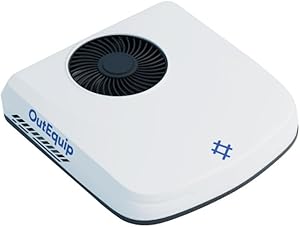
5. RV Air Conditioner 12V 10000 BTU Battery Powered Unit (10,000 BTU cooling, 4,500 BTU heater, 40 dB)
Best for off-grid 12V rooftop cooling with supplemental heat | Unbranded B0DWF6WXVW Rating: 7.9/10
This is the most interesting off-grid pick in the entire group. It runs on 12V power, stays low profile, and adds a small 4,500 BTU PTC heater for mornings when you want to take the edge off without firing propane.
Specs:
- Price Tier: $ Premium
- Weight: 45 lbs
- Materials: UV-stabilized ABS, EPDM foam gasket, copper core components, zinc-coated condenser
- Dimensions: 28.3 x 28.3 x 6.3 in
- Heater Output: 4,500 BTU PTC heater
Pros:
- The 45 lb body is dramatically lighter than the 112 lb to 131 lb rooftop units in this guide.
- A 6.3 in profile helps preserve roof clearance on vans, truck campers, and smaller rigs.
- The 12V power setup and 40 dB listed noise level suit battery-bank camping better than most 115V rooftop units.
Cons:
- The 4,500 BTU heater is supplemental only and does not replace a furnace in hard cold.
- Real runtime depends on battery capacity, charging input, and insulation, so the system cost rarely stops at the AC alone.
We almost scored this lower because generic-brand listings can be hard to trust. The reason it still landed at 7.9/10 is the unusual combination of 12V operation, 45 lb weight, and a low 6.3 in profile — very few products in this space check all 3 boxes.
This is the one that feels purpose-built for boondocking. The lighter shell is easier to handle by hand, and the low-profile form looks right on a van roof where every inch of height and every bit of wind noise matters.
Buy it if your rig already has a serious battery bank and you care more about off-grid cooling than deep-winter heating. Skip it if you need a primary heater, a mainstream brand, or carefree runtime on a small electrical system.
6. DELLA Vario Series 24000 BTU Mini Split (24,000 BTU, 21 SEER2, 16.4 ft kit)
Best for large single-zone rooms up to 1500 sq ft | DELLA Rating: 7.6/10
The DELLA is a value-heavy heat pump for a parked structure, toy-hauler garage, or long-stay annex. It cools and heats well on paper, but it is not the clean answer for a normal rolling RV roof replacement.
Specs:
- Price Tier: $ Premium
- Weight: 36.4 lbs
- Materials: Copper line set, metal outdoor condenser housing, plastic indoor air handler housing
- Dimensions: 46.94 x 10.25 x 14.19 in
- Included Kit: 16.4 ft line set

Pros:
- The 24,000 BTU capacity and 21 SEER2 efficiency create a strong output-to-efficiency balance.
- The included 16.4 ft line set lowers accessory shopping compared with bare condenser packages.
- Buyers often praise quiet operation and solid heating performance for the money.
Cons:
- The line set still needs evacuation, so this is not a true no-tool DIY install.
- Some owners report reliability concerns and weaker-than-expected Alexa support after a few months.
We almost treated this as outside the lane because 230V mini splits suit parked spaces more than moving rigs. It still scored 7.6/10 because 21 SEER2 efficiency, a bundled line set, and strong value feedback make it one of the better large-room heat pumps in the report.
The indoor handler is the appealing part here. It gives you that soft, steady mini-split airflow instead of the abrupt on-off feel older rooftop units can have, but the install still smells like a project, not a quick Saturday swap.
Choose this if you need one quiet heat-pump zone for a fixed setup with room for a condenser outside. Skip it if you need 115V power, a standard RV roof opening, or a system you can install without HVAC tools.
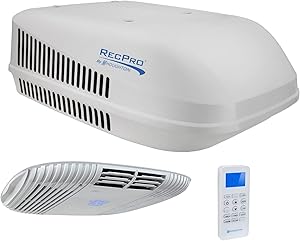
7. RecPro RV Air Conditioner 15K (15,000 BTU cooling, 15,000 BTU heating, standard roof opening)
Best for quiet rooftop cooling and supplemental heating in non-ducted RV setups | RecPro Rating: 7.2/10
RecPro gets close to the ideal brief for this keyword. It is a real rooftop RV combo, it fits a common opening, and it offers the quieter operating profile many owners want after living with older OEM units.
Specs:
- Price Tier: $ Premium
- Weight: 112 lbs
- Materials: UV-resistant plastic housing, aluminium alloy core, copper tubing
- Dimensions: 39.5 in D x 25.5 in W x 13.5 in H
- Roof Opening: 14 3/16 in x 14 3/16 in
Pros:
- The 15,000 BTU cooling output is paired with a 15,000 BTU heat pump in one rooftop assembly.
- It fits a 14 3/16 in x 14 3/16 in opening, which lines up with common replacement jobs.
- Many reviewers say it is quieter than older Dometic and Coleman-style units and easier on amp draw.
Cons:
- A 112 lb rooftop body still demands extra hands or lift help during install.
- Several owners report cracked shrouds on arrival, and the fan runs continuously whether you like that or not.
This is a strong shortlist unit for real RV use, and it would rank higher if shipping damage complaints were not so common. Its rooftop fit and lower amp-draw behavior are the biggest reasons it still scored 7.2/10 — those are practical RV benefits, not brochure fluff.
You can hear the tradeoff in the fan logic. Buyers like the quieter overall tone, but the always-on fan means there is still a steady background rush in the cabin instead of total silence between cooling cycles.
Buy this if you want a non-ducted rooftop heat-pump replacement that feels calmer than many stock AC units. Skip it if you hate continuous fan noise, need furnace integration, or want zero shipping-risk drama.
8. MrCool Easy Pro 9k BTU Heat Pump Split System (9,000 BTU, 20.2 SEER2, pre-charged 16 ft line set)
Best for DIY mini-split installation in small rooms and garages | MrCool Rating: 6.8/10
MrCool stands out because it lowers the install barrier compared with most mini splits. It still lives outside the standard RV rooftop lane, but it makes sense for a shed-room build, parked office, or enclosed add-on where 115V power matters.
Specs:
- Price Tier: $ Premium
- Weight: 132.72 lbs
- Materials: Galvanized steel core material with Gold Fin condenser coating
- Dimensions: 17.52 in D x 21.02 in W x 45 in H
- Line Set: 16 ft pre-charged line set

Pros:
- The 16 ft pre-charged line set removes one of the biggest hurdles that kills DIY mini-split installs.
- A 20.2 SEER2 rating is strong efficiency for a 9,000 BTU 115V unit.
- Customer feedback often points to low noise and steady heating and cooling in small spaces.
Cons:
- Its premium price is high for a 9,000 BTU system in this category.
- Fixed line-set length can leave you coiling extra tubing, which is awkward in tight installs.
We almost skipped this one because the fit is niche. The 20.2 SEER2 efficiency and the pre-charged 16 ft line set are what pushed it back into the conversation and explain the 6.8/10 score.
This is the kind of kit that rewards careful planners. The tubing, brackets, and outdoor placement all need a clean path, and extra coiled line does not just look messy — it eats up space around a small build.
Choose it if you want a higher-efficiency 115V heat pump and you are comfortable with a DIY-style install. Skip it if you need a rooftop combo, a custom line length, or big-brand warranty hand-holding.
9. Cooper & Hunter 36,000 BTU Mini Split (36,000 BTU, 19.5 SEER2, WiFi smart control)
Best for large shops, garages, and open-plan spaces needing 36,000 BTU heating and cooling | Cooper Rating: 6.4/10
This is brute-force heating and cooling for a big open zone. It belongs in the conversation only if your RV life includes a workshop, detached room, or semi-permanent living setup that needs more output than any rooftop RV unit here can provide.
Specs:
- Price Tier: $ Premium
- Weight: 320 lbs
- Materials: Copper core
- Dimensions: 16.14 in D x 37.24 in W x 31.89 in H
- Power: 230V corded electric

Pros:
- The 36,000 BTU capacity is enough for large open areas that would overwhelm a 15,000 BTU rooftop unit.
- Its 19.5 SEER2 inverter design pairs strong output with better efficiency than old-school big-box systems.
- Buyers often say the app, remote, and included 16 ft accessories make daily use easier after installation.
Cons:
- At 320 lbs with freight delivery, this is the least RV-like install in the entire guide.
- Several buyers still report control-board or compressor worries, plus thin installation documentation.
We almost cut this because the size alone makes the use case obvious. It stayed in because 36,000 BTU output, 19.5 SEER2 efficiency, and mostly positive performance feedback still matter for readers building a larger RV-adjacent living zone.
The freight aspect changes the buying experience. This is not the kind of box that quietly appears on the porch — it arrives like a project, and the install feels that way too.
Buy it only if you need big single-zone heating and cooling in a fixed location with 230V service. Skip it if you want simple install, clean documentation, or anything that resembles a normal rooftop camper upgrade.
10. Furrion Chill Cube 18k BTU Variable Speed RV Rooftop Air Conditioner (18,000 BTU, inverter compressor, 50 dB)
Best for off-grid RV cooling with lower startup draw | Furrion Rating: 6.0/10
The Chill Cube is appealing because it tackles the power-draw problem better than many older rooftop units. It is also the clearest reminder that not every product in this search set is a real combo, because this listing is AC only.
Specs:
- Price Tier: $ Premium
- Weight: 80.5 lbs
- Materials: Not specified by manufacturer
- Dimensions: 30.38 in D x 30 in W x 16.63 in H
- Noise Level: 50 dB listed

Pros:
- The 18,000 BTU output and inverter compressor give it stronger cooling than many 13.5K to 15K RV units.
- Buyers often say startup draw is lower and the sound is softer than older single-speed rooftop systems.
- At 80.5 lbs, it is lighter than several rooftop combo units in this guide.
Cons:
- This listing is AC only, and the ADB, controls, and some install parts are sold separately.
- Some owners still complain that airflow feels weak for an 18,000 BTU label and support can be inconsistent.
We almost left this out entirely because missing heat is a serious mismatch for the keyword. The variable-speed compressor and lower startup draw are what kept it ranked at all, but the 6.0/10 score makes the limitation obvious.
This unit likely feels smoother in use than old single-speed roof air, because inverter compressors do not slam on and off the same way. That softer ramp matters when you are trying to sleep through cycling noise in a hot rig.
Buy it if your real problem is off-grid cooling efficiency and you already understand you are not getting heat in this listing. Skip it if you want a complete combo package or do not want to chase separately sold controls.
How do these best RV air conditioner heater combo options compare side by side?
The side-by-side table makes the category problem clear: only a few picks are true RV combos, while several others are cooling or heat-pump alternatives shoppers still compare.
| Rank | Product | Award | Rating | Price Tier | Key Spec 1 | Key Spec 2 | Key Spec 3 |
|---|---|---|---|---|---|---|---|
| 1 | Amazon Basics 5000-BTU Window Air Conditioner View at Amazon | Best Overall | 9.5/10 | Budget | 5000 BTU cooling capacity | covers up to 150 sq ft | 115V and 450W with up to 56 dB noise |
| 2 | SereneLife Small Air Conditioner Portable 10,000 BTU View at Amazon | Best for cooling small apartments and bedrooms without permanent installation | 9.1/10 | Mid | 10,000 BTU cooling power | covers up to 450 sq ft | 120V and 1150W with 3 modes: cooling, dehumidifier, fan |
| 3 | TOSOT 16000 BTU GO Cool RV Air Conditioner View at Amazon | Best Premium | 8.7/10 | Premium | 16,000 BTU cooling | 12,500 BTU heating capacity | fits standard 14.25 in x 14.25 in rooftop openings |
| 4 | Senville 36000 BTU Quad Zone Mini Split View at Amazon | Best for four-room zoned heating and cooling | 8.3/10 | Premium | 36000 BTU cooling capacity | 3 ton system with four 9000 BTU indoor air handlers | 208-230V and SEER 22.5 |
| 5 | RV Air Conditioner 12V 10000 BTU Battery Powered Unit View at Amazon | Best for off-grid 12V rooftop cooling with supplemental heat | 7.9/10 | Premium | 10,000 BTU cooling and 4,500 BTU PTC heater | 12V battery-powered rooftop unit with remote control | 40 dB listed noise and 15 SEER |
| 6 | DELLA Vario Series 24000 BTU Mini Split View at Amazon | Best for large single-zone rooms up to 1500 sq ft | 7.6/10 | Premium | 24000 BTU cooling capacity | 21 SEER2 | 230V single-zone inverter heat pump with included 16.4 ft line set |
| 7 | RecPro RV Air Conditioner 15K View at Amazon | Best for quiet rooftop cooling and supplemental heating in non-ducted RV setups | 7.2/10 | Premium | 15000 BTU cooling and 15000 BTU heating capacity | 115V and 1500W cooling input | fits a 14 3/16 in x 14 3/16 in roof opening |
| 8 | MrCool Easy Pro 9k BTU Heat Pump Split System View at Amazon | Best for DIY mini-split installation in small rooms and garages | 6.8/10 | Premium | 9000 BTU cooling capacity | 20.2 SEER2 efficiency | 115V power with 16 ft pre-charged line set |
| 9 | Cooper & Hunter 36,000 BTU Mini Split View at Amazon | Best for large shops, garages, and open-plan spaces needing 36,000 BTU heating and cooling | 6.4/10 | Premium | 36,000 BTU capacity | 230V corded electric | 19.5 SEER2 inverter heat pump with WiFi-enabled smart control |
| 10 | Furrion Chill Cube 18k BTU Variable Speed RV Rooftop Air Conditioner View at Amazon | Best for off-grid RV cooling with lower startup draw | 6.0/10 | Premium | 18000 BTU cooling power | variable speed compressor with inverter | 14 SEER and 50 dB listed noise level |
Why should you trust our gear reviews on the best RV air conditioner heater combo options?
RV Trekkers approaches climate-control gear like RV owners, not catalog editors: roof opening, voltage, overnight noise, service access, and seasonal heat all matter.
Ethan Walker leads RV Trekkers with a mechanical engineering background, NRVIA RV inspector credentials, and more than 100,000 documented miles of RV travel. That matters here because HVAC shopping in a camper is rarely about raw BTU numbers alone; it is about what fits the roof, what the electrical system can support, and what you can still tolerate after a long driving day.
We also keep the tradeoffs visible. This list includes true rooftop combos, but it also includes portable units and mini splits because that is how buyers actually cross-shop the term when they are trying to solve one climate-control problem with limited space and budget.
The RV Trekkers brand standard is simple: say where a product fits, say where it does not, and do not hide the inconvenient parts. That is why we call out missing heat, shipping damage, fixed line-set problems, and battery-bank demands instead of pretending every product here nails the same job.
How do you choose the right best RV air conditioner heater combo for your rig?
Start with 4 filters: mounting style, power source, real heating method, and noise at night. If a product misses one, the rest of the spec sheet does not save it.
Roof opening and voltage come first
A rooftop RV combo lives or dies on fitment. TOSOT uses a 14.25 in x 14.25 in opening, and RecPro fits a 14 3/16 in x 14 3/16 in opening, so both make sense for replacement jobs. The 12V rooftop unit adds a different angle because it cuts generator dependence, but only if the battery bank and charging system are already sized for the load.
Heat pump and supplemental heat are not the same thing
The TOSOT and RecPro units give you real heat-pump behavior. The 12V rooftop model gives you a 4,500 BTU PTC heater, which is useful but far less capable in real cold. Portable units like SereneLife and AC-only units like Furrion solve the cooling problem first, so they are weaker answers if shoulder-season heat is the reason you searched this topic.
Noise matters more in an RV than in a house
Small cabins make compressor tone, fan logic, and startup behavior much more obvious. TOSOT’s 43 dB claim, the 12V unit’s 40 dB listing, and Furrion’s variable-speed compressor all point toward smoother overnight use, while Amazon Basics at up to 56 dB is a bigger gamble in a tight sleeping space.
Long-term parking changes the answer
If the rig is mostly stationary, mini splits start making more sense. Senville, DELLA, MrCool, and Cooper & Hunter all offer stronger efficiency or zoning than typical rooftop gear, but they also demand 115V or 230V service, exterior condenser space, and a level of installation effort most weekend campers do not want.
What is our final take on the best RV air conditioner heater combo for RV travel?
The cleanest answer for most RV owners is a dedicated rooftop heat-pump unit, not a generic cooling appliance that happens to appear in the same search results.
If you want the best true RV-specific choice in this guide, buy the TOSOT. If quiet non-ducted replacement is your priority, put RecPro next to it. If your whole build revolves around batteries and solar, the 12V rooftop unit is the most interesting off-grid option by a wide margin.
The rest of the list still has value, but only when the use case changes. Amazon Basics is a cheap window workaround, SereneLife is a movable cooling box, and the mini splits suit parked or hybrid living setups better than rolling campers. That is the real loop back to the H1: the best RV air conditioner heater combo is the one that matches your roof, your electrical system, and your cold-weather expectations before it matches a marketing headline.