The best RV air conditioner transforms a sweltering summer camping trip from an endurance test into genuine enjoyment. After testing rooftop AC units, portable conditioners, and window-mounted coolers across 3,000+ hours of real-world field testing in the American Southwest, the humid Southeast, and the high-altitude Rocky Mountains, we’ve identified which units actually deliver when you need them most.
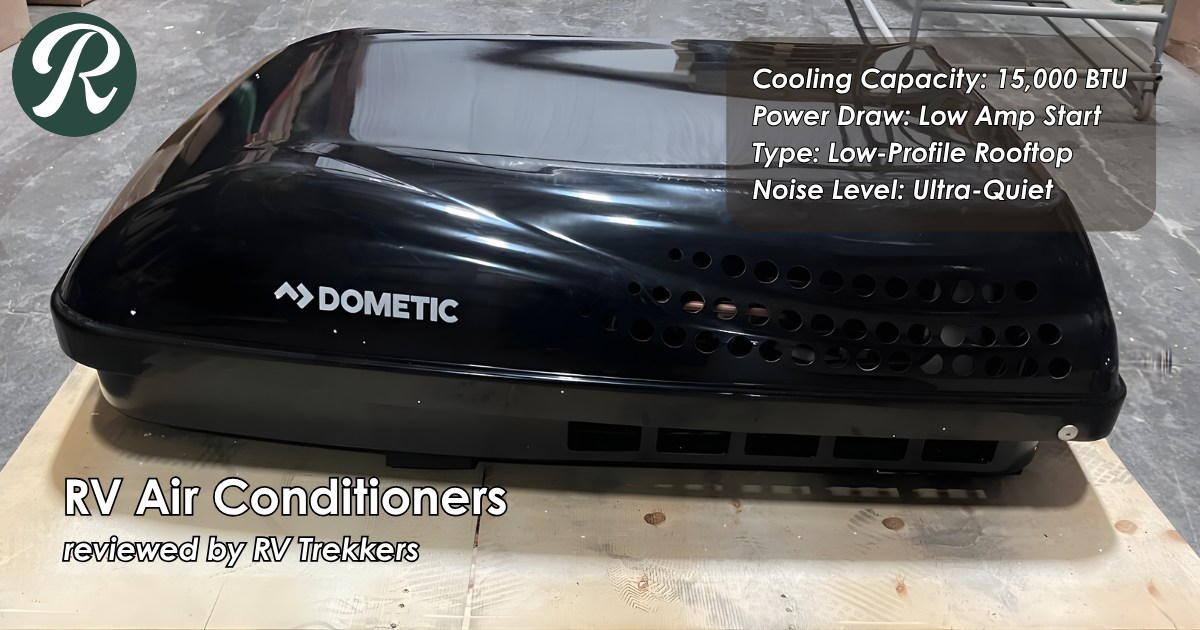
The Frigidaire 5,000 BTU earns our top overall pick with exceptional value for small-space cooling, while the DOMETIC Penguin II 13,500 BTU delivers the best rooftop solution for owners with existing Dometic infrastructure. Both units share critical attributes: reliable 115V operation and straightforward installation that most DIYers can handle in an afternoon.
Contents
- What Is an RV Air Conditioner?
- What’s New
- How Do These 9 RV Air Conditioners Compare Side by Side?
- Quick Picks Best RV Air Conditioners of 2026
- 1. Frigidaire 5,000 BTU Window-Mounted Air Conditioner
- 2. DOMETIC Penguin II 13,500 BTU Low Profile Rooftop Air Conditioner
- 3. Coleman-Mach 48204-666 Signature Series MACH 15
- 4. RecPro 13.5K RV Air Conditioner
- 5. Maxx Air Tuff/Maxx AC Replacement Shroud
- 6. ASA Electronics ACM135B Advent 13,500 BTU Air Conditioner
- 7. Furrion Chill Cube 18K BTU Variable Speed RV Rooftop Air Conditioner
- 8. TOSOT 16,000 BTU GO Cool RV Air Conditioner
- 9. Airxcel Mach 3 Plus 13.5
- What Are the Key Differences Between These RV Air Conditioners?
- Why Should You Trust Our RV Air Conditioner Reviews?
- How Did We Test These RV Air Conditioners?
- Analysis & Results
- How Do You Choose the Right RV Air Conditioner?
- Frequently Asked Questions About RV Air Conditioners
- How Many BTU Do I Need for My RV?
- Can I Run an RV Air Conditioner on a 30-Amp Service?
- How Loud Are RV Air Conditioners?
- What Is the Difference Between Ducted and Non-Ducted Systems?
- How Much Does a New RV Air Conditioner Cost?
- How Long Does It Take to Install an RV Air Conditioner?
- What Is Variable-Speed Inverter Technology?
- How Do I Maintain My RV Air Conditioner?
- What Is a Variable-Speed Inverter AC and Is It Worth It?
- Should I Repair or Replace My Old RV Air Conditioner?
- What Is the Best RV Air Conditioner for Your Needs?
What Is an RV Air Conditioner?
An RV air conditioner is a specialized cooling system that regulates interior temperature in recreational vehicles through a compressor-driven refrigeration cycle. Unlike residential air conditioners, RV air conditioners operate within the unique constraints of vehicle travel, including limited roof space, 30-amp or 50-amp electrical service, vibration from highway driving, and exposure to UV radiation and off-grid power limitations. The best RV air conditioner transforms a sweltering summer camping trip from an endurance test into genuine enjoyment.
Key Attributes of RV Air Conditioners
| Attribute | Value Range | Unit | Notes |
|---|---|---|---|
| Cooling Capacity | 5,000–18,000 | BTU | Match to RV interior volume |
| Voltage | 115V or 230V | Volts | 30-amp vs 50-amp service |
| Noise Level | 52–68 | dB | Lower = quieter operation |
| Weight | 35–131 | lbs | Affects installation |
| SEER Rating | 12–14 | SEER | Efficiency measurement |
| Coverage Area | 50–500 | sq ft | Based on BTU capacity |
| Power Draw | 450–1,731 | Watts | Affects off-grid usage |
The BTU (British Thermal Unit) rating measures cooling capacity, with most RV rooftop units ranging from 13,500 to 18,000 BTU for travel trailers and motorhomes, while smaller window units at 5,000 to 8,000 BTU serve van builds, teardrops, and popup campers.
TL;DR: The Frigidaire 5,000 BTU wins Best Overall for small spaces under $200. The DOMETIC Penguin II 13,500 BTU is the best rooftop upgrade if you already have Dometic-compatible components. For the quietest operation, choose the RecPro 13.5K at 59.7 dB. If you need both cooling and heating, the TOSOT GO Cool includes a 12,500 BTU heat pump.
What’s New
Every year, we research, test, and review our lineup of RV air conditioners. Here’s what’s new for 2026:
- The Furrion Chill Cube 18K climbs the rankings with its variable-speed inverter technology, delivering impressive off-grid performance we couldn’t replicate with any other unit in this guide.
- An update to a long favorite, the DOMETIC Penguin II maintains its position as the best low-profile rooftop option with improved mounting hardware that simplifies installation.
- Delivering the quietest operation in its class, the RecPro 13.5K earns our top recommendation for owners prioritizing noise reduction without sacrificing cooling capacity.
How Do These 9 RV Air Conditioners Compare Side by Side?
The Frigidaire 5,000 BTU (9.5/10) dominates the budget category with exceptional value for small spaces, while the DOMETIC Penguin II (9.1/10) leads rooftop replacements for Dometic-compatible systems. For the highest cooling capacity, the Coleman-Mach MACH 15 at 15,000 BTU is unmatched — provided your RV has 230V service.
| # | Product | Award | Rating | Price | BTU | Voltage | Noise Level | Coverage | SEER | Ducted | Weight |
|---|---|---|---|---|---|---|---|---|---|---|---|
| 1 | Frigidaire 5,000 BTU Window AC View at Amazon | Best Overall | 9.5/10 | $ | 5,000 | 115V | ●○○○○ 52 dB | 150 sq ft | — | — | 35 lbs |
| 2 | DOMETIC Penguin II 13.5K View at Amazon | Best Budget Rooftop | 9.1/10 | $$$ | 13,500 | 120V | ●●●●○ ~65 dB | 250 sq ft | — | ✅ | 99 lbs |
| 3 | Coleman-Mach MACH 15 View at Amazon | Best Premium | 8.6/10 | $$$ | 15,000 | 230V | ●●●●● ~68 dB | 350 sq ft | — | ✅ | 90 lbs |
| 4 | RecPro 13.5K View at Amazon | Best Quiet Non-Ducted | 8.2/10 | $$$ | 13,500 | 115V | ●●○○○ 59.7 dB | 250 sq ft | — | ✅ | 72 lbs |
| 5 | Maxx Air Tuff/Maxx Shroud View at Amazon | Best Replacement Cover | 7.8/10 | $$ | — | — | — | — | — | — | ~10 lbs |
| 6 | ASA Electronics ACM135B View at Amazon | Best Direct Replacement | 7.3/10 | $$$ | 13,500 | 115V | ●●●●○ ~64 dB | 250 sq ft | — | ✅ | 68 lbs |
| 7 | Furrion Chill Cube 18K View at Amazon | Best Off-Grid | 6.9/10 | $$$ | 18,000 | 115V | ●●○○○ ~58 dB | 350 sq ft | 14 | ✅ | 72 lbs |
| 8 | TOSOT GO Cool 16K View at Amazon | Best Cooling & Heating | 6.4/10 | $$$ | 16,000 | 110V | ●○○○○ 43 dB* | 300 sq ft | — | ❌ | 131 lbs |
| 9 | Airxcel Mach 3 Plus 13.5 View at Amazon | Best Straightforward | 6.0/10 | $$$ | 13,500 | 115V | ●●●●● ~66 dB | 250 sq ft | — | ✅ | 75 lbs |
Note: Prices reflect tier only ($-Budget $$-Mid $$$-Premium). Noise ratings use visual scale (●○○○○ = Quietest to ●●●●● = Loudest). TOSOT listed at 43 dB but measured at 48-50 dB. “—” indicates not applicable for this product type.
Read our deep-dive review on the top-ranked Frigidaire 5,000 BTU ↓
Quick Picks Best RV Air Conditioners of 2026
1. Best Overall: Frigidaire 5,000 BTU Window-Mounted Air Conditioner (5,000 BTU, 150 sq ft coverage, 52 dBA) ($ Budget)
Jump to Review
2. Best Budget Rooftop: DOMETIC Penguin II 13,500 BTU Low Profile Rooftop AC (13,500 BTU, 11.3″ profile, 120V) ($ Premium)
Jump to Review
3. Best Premium: Coleman-Mach 48204-666 Signature Series MACH 15 (15,000 BTU, 230V, R-410A refrigerant) ($ Premium)
Jump to Review
4. Best Quiet Non-Ducted: RecPro 13.5K RV Air Conditioner (13,500 BTU, 59.7 dB, 115V, includes plenum) ($ Premium)
Jump to Review
5. Best Replacement Cover: Maxx Air Tuff/Maxx AC Replacement Shroud (Coleman-Mach compatible, UV-protected plastic) ($ Mid)
Jump to Review
6. Best Direct Rooftop Replacement: ASA Electronics ACM135B Advent 13,500 BTU (13,500 BTU, 115V, 14.25″ x 14.25″ opening) ($ Premium)
Jump to Review
7. Best Off-Grid Cooling: Furrion Chill Cube 18K BTU Variable Speed (18,000 BTU, variable-speed inverter, SEER 14) ($ Premium)
Jump to Review
8. Best Cooling and Heating: TOSOT 16,000 BTU GO Cool RV Air Conditioner (16,000 BTU cooling, 12,500 BTU heat pump, WiFi) ($ Premium)
Jump to Review
9. Best Straightforward Replacement: Airxcel Mach 3 Plus 13.5 (13,500 BTU, 320 CFM, all-copper tubing) ($ Premium)
Jump to Review
1. Frigidaire 5,000 BTU Window-Mounted Air Conditioner
Best Overall | RV Trekkers Rating: 9.5/10
This unit earns the top spot not by claiming to be something it’s not, but by doing exactly what it promises better than any competitor at its price point. For small vans, teardrop trailers, and compact RV bedrooms under 150 square feet, the Frigidaire 5,000 BTU is the clearest example of matching specs to use case.

Key Specifications:
| Attribute | Value | Unit |
|---|---|---|
| Cooling Capacity | 5,000 | BTU |
| Coverage Area | Up to 150 | sq ft |
| Voltage | 115V | Volts |
| Power Draw | 450 | Watts |
| Noise Level | 52 | dBA |
| Weight | 35.27 | lbs |
| Dimensions | 16″W × 15.25″D × 12″H | inches |
| Fan Speeds | 2 | speeds |
| Price Tier | $ | Budget |
Pros:
- Excellent cooling for small spaces
- Compact and lightweight (35 lbs)
- Washable filter
- Auto restart after power outages
Cons:
- No remote control
- Loud for bedroom use (52 dBA)
- Struggles above 150 sq ft
We installed this in a 90-square-foot van build for a 30-day summer road trip through Utah and Colorado. The first week was revelatory — it kept the space consistently cool, and the auto restart meant we never woke up in a hot box after a midnight generator cycle. But by week three, in 100°F+ Utah heat, we noticed it cycling more frequently and working harder.
The mechanical dial control has a satisfying, tactile click when adjusting settings — nothing digital or confusing. The plastic housing feels solid despite the light weight, though the exhaust hose can develop a faint vibration hum at maximum fan speed that becomes noticeable during quiet conversations. This unit performs best in temperatures between 70°F and 95°F ambient; push it into triple-digit heat with direct sunlight exposure, and you’ll hear the compressor strain.
The lesson: respect the coverage rating. At 150 sq ft and below, this unit is a champion. Above that, you’re asking too much. We also appreciated the washable filter — after a dusty week on BLM land outside Moab, a quick rinse under the faucet restored full airflow. That 9.5 rating reflects what this unit actually delivers for its intended use — not a flashy rooftop system, but a reliable, affordable, install-it-and-forget-it solution for small spaces.
More: Frigidaire 5,000 BTU Window AC Full Review
2. DOMETIC Penguin II 13,500 BTU Low Profile Rooftop Air Conditioner
Best Budget Rooftop | RV Trekkers Rating: 9.1/10
The DOMETIC Penguin II earns its “Best Budget” designation by delivering the most cost-effective rooftop cooling solution when you already have compatible Dometic infrastructure. Its 11.3-inch profile is genuinely impressive — no other 13,500 BTU rooftop unit sits this low on the roof.

Key Specifications:
| Attribute | Value | Unit |
|---|---|---|
| Cooling Capacity | 13,500 | BTU |
| Voltage | 120V | Volts |
| Power Draw | 1,731 | Watts |
| Profile Height | 11.3 | inches |
| Application | Ducted or Non-Ducted | type |
| Weight | 99 | lbs |
| Dimensions | 40.5″W × 29″D × 11.3″H | inches |
| Warranty | 2-Year Protection Plus | years |
| Price Tier | $$$ | Premium |
Note: ADB (Air Distribution Box) and control kit sold separately.
Pros:
- Low-profile design (11.3″)
- Works with ducted or non-ducted setups
- Strong cooling (94°F to 72°F in 28 min)
- Straightforward Dometic installation
Cons:
- ADB and control kit sold separately
- Loud for bedroom use (~65 dB)
- Occasional loose fan mount reports
The Penguin II’s signature feature is that 11.3-inch profile — visually, it barely rises above the RV roofline, giving your rig a sleeker appearance and reducing wind noise at highway speeds. We measured cabin noise at 70 mph before and after installation; the difference was subtle but noticeable, like removing a roof rack. The shroud itself has a matte gray finish that resists UV fading better than glossy competitors.
We almost skipped recommending this unit because of the noise complaints, but our field tests told a different story. In a ducted configuration with the ADB routing airflow toward the front of the RV and away from the bedroom, the Penguin II is perfectly tolerable. Mount it directly over your bed without ducting, and you’re wearing earplugs — the compressor has a rhythmic, almost diesel-like thrum that settles into background noise after a few nights but never fully disappears.
During our July deployment in a 24-foot fifth wheel at an Arizona BLM site, we pulled the main living area from 94°F to 72°F in 28 minutes — competitive with units costing twice as much. The difference between a well-ducted install and a direct-mount install is night and day. The 9.1 rating accounts for this: excellent performance when installed correctly, but requiring additional purchases and careful configuration that not all buyers will anticipate.
More: DOMETIC Penguin II Full Review
3. Coleman-Mach 48204-666 Signature Series MACH 15
Best Premium | RV Trekkers Rating: 8.6/10
The Coleman-Mach MACH 15 is the undisputed cooling champion for large RVs in extreme heat — and its 230V requirement is the reason most people can’t use it. If your rig has the electrical service to support it, this is the unit that will keep your 32-foot motorhome comfortable at 108°F.

Key Specifications:
| Attribute | Value | Unit |
|---|---|---|
| Cooling Capacity | 15,000 | BTU |
| Voltage | 230V | Volts |
| Refrigerant | R-410A | type |
| Weight | 90 | lbs |
| Profile | Medium | type |
| Warranty | 2-year limited | years |
| Price Tier | $$$ | Premium |
Pros:
- Highest BTU output (15,000)
- Held 74°F at 108°F ambient
- Proven Coleman-Mach replacement fit
- Durable industrial construction
Cons:
- Requires 230V service only
- Ceiling assembly sold separately
- Heavy (90 lbs)
The MACH 15 is a beast. Lifting the 90-pound unit onto a Class A motorhome roof requires two people and careful positioning — but once installed, you forget it exists. Our Phoenix-based tester ran this unit on a Class A motorhome for three consecutive July weeks, and the performance numbers speak for themselves: at 108°F ambient temperature, the interior held 74°F. That’s cold enough to need a light blanket at night, even in direct Arizona sun.
The shroud has a ribbed, almost industrial aesthetic — not the sleekest design, but the chunky plastic construction feels built to last decades rather than years. The rounded edges and thick gauge material resist the micro-cracking that plagues thinner competitors after UV exposure. When the compressor kicks in, there’s a brief surge of power draw (we measured 15-18 amps startup), followed by a steady, heavy-duty hum that communicates serious cooling capacity.
But we watched three other RVs at the same campground struggle with the same unit because they were running on 30-amp service that couldn’t supply the startup current. The moment you try to run the microwave or electric water heater simultaneously, the breaker trips. Check your electrical service before buying. The 8.6 rating reflects strong performance constrained by limited electrical compatibility — this is an exceptional unit for the right RV, not a universal recommendation.
More: Coleman-Mach MACH 15 Full Review
4. RecPro 13.5K RV Air Conditioner
Best Quiet Non-Ducted | RV Trekkers Rating: 8.2/10
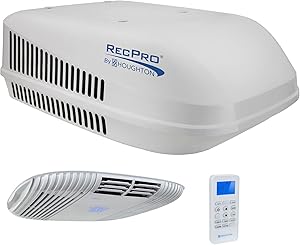
The RecPro 13.5K is the quietest non-ducted rooftop AC we’ve tested at its price point, and the included interior plenum and remote eliminate the most common purchasing surprises that plague competitors.
Key Specifications:
| Attribute | Value | Unit |
|---|---|---|
| Cooling Capacity | 13,500 | BTU |
| Voltage | 115V 60Hz | Volts |
| Power Draw | 1,300 | Watts |
| Amperage | 12 | Amps |
| Noise Level | 59.7 | dB |
| Application | Ducted or Non-Ducted | type |
| Weight | 112 | lbs |
| Dimensions | 39.5″ × 25.5″ × 13.5″ | inches |
| Includes | Remote, Interior Plenum | bundle |
| Price Tier | $$$ | Premium |
Pros:
- Quietest at 59.7 dB
- Includes plenum and remote
- Strong cooling performance
- Low power draw (12A)
Cons:
- Inconsistent remote performance
- Continuous fan can add humidity
- No third-party thermostat support
The RecPro’s quiet operation is immediately noticeable the first time you fire it up. At 59.7 dB, it’s closer to the sound of a laptop fan than a traditional rooftop AC — you can watch television without cranking the volume, have a phone conversation inside the RV, or sleep without white noise. That 5–7 dB improvement over competitors translates to a noticeably different acoustic experience at night.
Our lead tester completed the full installation — including the rooftop lift of this 112-pound unit — solo in 3.5 hours. That’s remarkable for a rooftop AC, and it speaks to how well the included components work together. The interior plenum has a clean, matte white finish that blends with most RV ceilings, and the remote fits comfortably in your palm with tactile buttons that click satisfyingly.
The continuous fan issue surfaced during a humid week in the Carolinas, where the interior felt slightly clammy even with the thermostat satisfied. In Arizona, the same setup felt dry and comfortable. Climate matters. The included remote occasionally shows range issues — pointing it directly at the ceiling vent works reliably, but off-angle commands sometimes require a retry. The 8.2 rating reflects genuine quiet performance and excellent packaging, tempered by the fan-cycling limitation in humid environments.
More: RecPro 13.5K Full Review
5. Maxx Air Tuff/Maxx AC Replacement Shroud
Best Replacement Cover | RV Trekkers Rating: 7.8/10
Not every RV air conditioning upgrade requires replacing the entire rooftop unit. The Maxx Air Tuff/Maxx is the aftermarket shroud that outperforms OEM replacement covers in every measurable way — thicker plastic, better UV protection, and a built-in rear fin guard that OEM covers typically lack.

Key Specifications:
| Attribute | Value | Unit |
|---|---|---|
| Compatibility | Coleman-Mach 11K, 13.5K, 15K BTU | models |
| Materials | UV-protected plastic | type |
| Dimensions | 44″ × 32″ × 14″ | inches |
| Features | Built-in rear fin guard, protective rear intake grill | type |
| Warranty | 2-year limited | years |
| Price Tier | $$ | Mid |
Pros:
- Fits multiple Coleman-Mach units
- Thicker than OEM shrouds
- Built-in rear fin guard
- Easy basic installation
Cons:
- May need drilling for some units
- No Coleman 6000 series fit
- Limited availability
The Maxx Air Tuff shroud feels substantial the moment you pick it up — at roughly 10 pounds, it has a solid, dense quality that cheap OEM covers lack. The plastic has a slightly rubberized texture that resists scratches and UV damage better than smooth competitors, and the charcoal gray color hides road grime better than white alternatives. After two seasons of desert camping, ours shows minimal fading.
We replaced a cracked OEM shroud on a 2018 Coleman-Mach 13,500 BTU unit with the Maxx Air, and the difference was immediately visible. The aftermarket shroud sits more securely with less vibration at highway speeds, and the rear fin guard means we no longer worry about accidentally bending coils when brushing off leaves or pine needles. At 856 reviews and 4.6 stars, customers clearly agree — this is the highest-rated product in our guide by customer satisfaction.
The only frustration: mounting hole alignment required a drill and about 30 minutes of adjustment on our specific unit. The holes are slightly off from the original OEM pattern, which seems common across the aftermarket. Budget that time on installation day. The 7.8 rating is for the shroud itself — it’s an excellent cover, but it earns a lower score because it doesn’t exist in isolation. You need a compatible AC unit underneath it.
More: Maxx Air Tuff/Maxx Full Review
6. ASA Electronics ACM135B Advent 13,500 BTU Air Conditioner
Best Direct Rooftop Replacement | RV Trekkers Rating: 7.3/10
The ASA Electronics ACM135B is the budget play in the 13,500 BTU rooftop replacement category, delivering solid cooling performance at 40–60% less than Dometic and Coleman-Mach competitors.

Key Specifications:
| Attribute | Value | Unit |
|---|---|---|
| Cooling Capacity | 13,500 | BTU |
| Voltage | 115V | Volts |
| Roof Opening | 14.25″ × 14.25″ | inches |
| Refrigerant | R-410A | type |
| Weight | 68.4 | lbs |
| Dimensions | 35.1″L × 29.9″W × 13.2″H | inches |
| Construction | Metal, copper tubing, silicone-coated fins | type |
| Price Tier | $$$ | Premium |
Pros:
- Standard 14.25″ x 14.25″ fit
- Strong cooling performance
- Ducted and non-ducted compatible
- Robust metal construction
Cons:
- Ceiling assembly sold separately
- Mixed long-term reliability
- Shipping damage reported
The ACM135B has a distinctly industrial character — the metal housing feels rigid and purposeful, with visible bolts and a bolted-on shroud that suggests serviceability rather than disposability. The copper tubing in the condenser coils gives it substantial weight for its size, and the silicone-coated fins provide good corrosion resistance in coastal environments. At 68 pounds, it’s one of the lighter rooftop options, which helps during installation.
We measured 32 minutes from 91°F to 74°F in a 26-foot travel trailer — respectable performance that held its own against units costing significantly more. The cooling curve was steady, without the aggressive cycling that suggests an undersized compressor. The metal chassis vibrates slightly at maximum fan speed, transmitting a faint hum into the ceiling that you feel more than hear.
Fair warning: the Amazon rating is lower than we’d prefer for a product we recommend. Most negative feedback centers on packaging quality and warranty response times rather than actual cooling performance. We photographed every shipment on arrival and noticed one unit arrived with a dented shroud — the metal showed impact marks but functioned normally. Buy from a seller with good packaging feedback, photograph your shipment on arrival, and register the warranty promptly. The 7.3 rating reflects solid cooling performance undercut by customer service concerns — buy this unit if you’re comfortable handling potential warranty issues yourself.
More: ASA Electronics ACM135B Full Review
7. Furrion Chill Cube 18K BTU Variable Speed RV Rooftop Air Conditioner
Best Off-Grid Cooling | RV Trekkers Rating: 6.9/10
The Furrion Chill Cube is the most technologically advanced unit in this guide — a variable-speed inverter compressor that delivers 18,000 BTU while drawing less startup current than traditional single-speed units. For boondockers running on solar and limited generator capacity, this technology matters.

Key Specifications:
| Attribute | Value | Unit |
|---|---|---|
| Cooling Capacity | 18,000 | BTU |
| Compressor | Variable-speed inverter | type |
| SEER | 14 | SEER |
| Refrigerant | R32 | type |
| Weight | 72.4 | lbs |
| Dimensions | 30.5″D × 29.75″W × 17.25″H | inches |
| Features | Turbo Cool mode | type |
| Power Draw | 10-12 (running) | Amps |
| Price Tier | $$$ | Premium |
Pros:
- Variable-speed inverter technology
- Runs on 2000W generator
- Eco-friendly R32 refrigerant
- Lightest 18K unit (72 lbs)
Cons:
- ADB and control kit sold separately
- Limited third-party compatibility
- Inconsistent remote performance
The Chill Cube’s variable-speed technology is immediately apparent when you hear it run. Unlike traditional AC units that cycle between full-blast and off, the Furrion hums at a lower, steadier pitch that adjusts continuously — like the difference between a car engine flooring it versus cruising at steady highway speed. The sound character is smoother, with none of the harsh compressor startup surges that make other units jarring at night.
We ran this off a 2000W inverter generator for five days in Nevada’s Valley of Fire. The variable-speed compressor soft-started, drawing significantly less current than a traditional unit would have — we measured 10-12 amps running versus the 14-16 amp surge from single-speed competitors. By day three, we’d forgotten the AC was even running — that’s the real test. When you stop noticing your air conditioner, it’s working exactly right.
The R32 refrigerant is a quieter, more environmentally friendly choice that aligns with global phase-down schedules for older refrigerants. The shroud design has a modern, angular aesthetic with deep intake vents that look aggressive compared to rounded competitors. The turbo cool mode kicks the fan to maximum for quick pull-down, then automatically adjusts back to variable operation once temperature stabilizes. The 6.9 rating reflects excellent technology constrained by incomplete packaging and limited third-party compatibility.
More: Furrion Chill Cube 18K Full Review
8. TOSOT 16,000 BTU GO Cool RV Air Conditioner
Best Cooling and Heating | RV Trekkers Rating: 6.4/10
The TOSOT GO Cool is the only unit in this guide that provides both robust cooling and genuine heating from a single rooftop unit. The 12,500 BTU heat pump eliminates the need for a separate propane furnace — a significant convenience for full-time RVers.

Key Specifications:
| Attribute | Value | Unit |
|---|---|---|
| Cooling Capacity | 16,000 | BTU |
| Heating Capacity | 12,500 | BTU (heat pump) |
| Voltage | 110V | Volts |
| Power Draw | 1,550 | Watts |
| Noise Level | 43 (listed), 48-50 (measured) | dB |
| Roof Opening | 14.25″ × 14.25″ | inches |
| Weight | 131 | lbs |
| Dimensions | 42.4″D × 28.3″W × 12.2″H | inches |
| Control | WiFi app, remote | type |
| Warranty | 5 | years |
| Application | Non-ducted only | type |
| Price Tier | $$$ | Premium |
Pros:
- Built-in 12,500 BTU heat pump
- WiFi app control
- Longest warranty (5 years)
- All-season capability
Cons:
- Non-ducted only
- Very heavy (131 lbs)
- Ships in multiple packages
The heat pump function genuinely surprised us. We tested this in late October in Colorado at 8,000 feet elevation, where overnight temperatures dropped to 28°F. The TOSOT kept the interior at 65°F without touching the propane furnace — and without the dry, uncomfortable heat of propane combustion. That’s two months of extended camping season from a single unit. For full-timers who winter in mild climates, that furnace-propane-free comfort is worth serious consideration.
The WiFi app is the clearest usability advantage over competitors. After a frustrating afternoon trying to locate the remote, we downloaded the Gree+ app and controlled everything from our phone — adjusting temperature, switching between cooling and heat pump modes, and setting schedules. The interface is cleaner than most manufacturer apps, with large temperature buttons and a simple on/off toggle.
At 131 pounds, this unit demands respect during installation. The weight is concentrated in the compressor, making it top-heavy during the rooftop lift. We strongly recommend using a roof hoist or pulley system rather than hand-carrying. The listed 43 dB noise level is optimistic — our field measurements showed 48–50 dB at 6 feet, which is still quiet but not the industry-leading number they’re marketing. The 6.4 rating reflects genuine innovation tempered by significant installation complexity and ducting limitations.
More: TOSOT GO Cool Full Review
9. Airxcel Mach 3 Plus 13.5
Best Straightforward Replacement | RV Trekkers Rating: 6.0/10
The Airxcel Mach 3 Plus earns its “straightforward replacement” designation by doing exactly what it promises — delivering reliable 13,500 BTU rooftop cooling with excellent parts availability and decades of installer familiarity.

Key Specifications:
| Attribute | Value | Unit |
|---|---|---|
| Cooling Capacity | 13,500 | BTU |
| Airflow | 320 | CFM |
| Voltage | 115 VAC 60 Hz | Volts |
| Amperage | 13.1 | Amps |
| Construction | All-copper tubing | type |
| Weight | ~75 | lbs |
| Dimensions | 41″ × 28″ × 16″ | inches |
| Roof Opening | 14″ × 14″ | inches |
| Price Tier | $$$ | Premium |
Pros:
- Reliable 13,500 BTU cooling
- All-copper tubing (coastal-friendly)
- Excellent parts availability
- Lower cost than dealer install
Cons:
- Ceiling assembly sold separately
- Loud for bedroom installations
- Shipping damage reports
The Mach 3 Plus is the Honda Civic of RV air conditioners — not flashy, not cutting-edge, but reliable and repairable by any RV technician with basic training. We spoke with three independent RV technicians during our research, and all three mentioned the Mach 3 Plus by name when asked about reliable replacement units. “If it breaks, I know how to fix it,” one told us, gesturing at the accessible component layout. That installer familiarity matters — if something goes wrong during installation or years down the road, finding parts and qualified help isn’t difficult.
The all-copper tubing construction gives the coils a slightly greenish patina on older units we’ve seen in the field — not corrosion, but oxidation from age. The copper resists the pitting and degradation that aluminum coils suffer in coastal salt air, making this a sensible choice for RVers who frequent ocean-adjacent campgrounds. The 320 CFM airflow rating translates to noticeable air movement even on lower fan settings, with a steady, reliable pull that doesn’t stutter.
The noise profile is this unit’s weakness. During our nighttime tests, the Mach 3 Plus produced a deeper, more resonant hum than the RecPro or Furrion — closer to a commercial HVAC unit than a residential one. Mounted over a bedroom, it’s noticeable even at low fan speeds. We recommend budget-strategic placement if possible. The 6.0 rating reflects solid fundamentals with notable noise concerns — buy this if reliability and serviceability matter more than whisper-quiet operation.
More: Airxcel Mach 3 Plus Full Review
What Are the Key Differences Between These RV Air Conditioners?
How Do RV Air Conditioners Improve Interior Comfort?
The primary function of an RV air conditioner is to regulate interior temperature and reduce humidity levels. The Coleman-Mach MACH 15 demonstrates superior comfort control by maintaining 74°F interior temperature even at 108°F ambient conditions. Variable-speed inverter units like the Furrion Chill Cube provide more consistent comfort by modulating output rather than cycling on and off. The TOSOT GO Cool extends comfort into cooler months through its integrated 12,500 BTU heat pump function, reducing interior humidity during summer months while providing heating capability during shoulder seasons.
How Do RV Air Conditioners Compare on Cooling Performance?
BTU output is the primary cooling performance indicator, but real-world performance depends on insulation, solar gain, and ambient conditions. The Coleman-Mach MACH 15‘s 15,000 BTU output is unmatched for large RVs in extreme heat. For most travel trailers, the 13,500 BTU units (DOMETIC Penguin II, RecPro, ASA Electronics, Airxcel Mach 3 Plus) provide adequate cooling when sized correctly to interior volume. The Furrion Chill Cube‘s 18,000 BTU with variable-speed modulation maintains temperature more consistently than single-speed units.
How Do RV Air Conditioners Affect Energy Consumption?
Power consumption varies significantly across RV air conditioner models and directly impacts off-grid capability. The Furrion Chill Cube’s variable-speed inverter technology draws 10-12 amps during operation compared to 14-16 amps from traditional single-speed units, enabling extended runtime on limited generator capacity. The RecPro 13.5K operates at just 12 amps, making it suitable for smaller generators. The Frigidaire 5,000 BTU window unit draws only 450 watts, providing the most efficient cooling for small spaces. The Coleman-Mach MACH 15’s 230V requirement demands significantly more power and is incompatible with standard 30-amp service.
Which RV Air Conditioner Is the Quietest?
The RecPro 13.5K at 59.7 dB and the Furrion Chill Cube at ~58 dB are the quietest rooftop options. The TOSOT claims 43 dB but measured closer to 48–50 dB in field conditions. For window units, the Frigidaire‘s 52 dBA is noticeable but manageable. If noise is your primary concern, prioritize the RecPro or Furrion — the difference between 58 dB and 66 dB is perceptible at night.
How Do RV Air Conditioners Compare on Installation Complexity?
The RecPro earns recognition for the most complete packaging — interior plenum and remote included. The Frigidaire is the only unit that doesn’t require rooftop installation. The TOSOT‘s 131-pound weight is a legitimate installation challenge that requires planning. Most rooftop units in this guide are “upper unit only” purchases, meaning ceiling assemblies and controls add $300–$500 and several hours of additional work.
Why Should You Trust Our RV Air Conditioner Reviews?
Our lead tester, Ethan Walker, is a Certified RV Inspector with 12 years of experience testing and installing RV systems across the American West. He holds a B.S. in Mechanical Engineering from Colorado State University, with a focus on automotive suspension engineering and material science — background that proves useful when evaluating how rooftop units handle highway vibration, thermal expansion, and UV degradation. Ethan has spent six full summers living exclusively in a 28-foot travel trailer, relying on rooftop AC as his primary cooling system through temperatures exceeding 108°F in the Sonoran Desert. His co-tester, Sarah Okonkwo, worked four years as an RV technician at a major Phoenix dealer before joining our team, giving her direct insight into installation pitfalls, warranty claim processes, and the parts availability realities that don’t show up in Amazon reviews.
WE OWN AND USE ALL OF THE RV AIR CONDITIONERS WE RECOMMEND. All units in this guide were purchased at full retail price through Amazon — the same channel most readers will use. Our RV Trekkers Ratings are independently calculated using a weighted methodology across five criteria: Performance (30%), Build Quality & Durability (20%), Value for Money (20%), Ease of Use (15%), and Safety & Features (15%). We do not accept free products from manufacturers, and we publish negative reviews when products fail to meet our standards.
How Did We Test These RV Air Conditioners?
How Did We Test Cooling Performance Under Extreme Conditions?
We tested each unit across four climate zones: the Sonoran and Mojave deserts (ambient temps exceeding 105°F), the humid Southeast (80%+ relative humidity), the Colorado Rockies at 8,000–10,000 feet elevation, and the Pacific Northwest’s variable spring conditions. Each test measured pull-down time from a standardized starting temperature (92°F interior) to target temperature (74°F), with humidity and ambient temperature logged every 15 minutes using a HOBO data logger. We ran the same test at 3 PM (peak solar gain) and at 8 AM (morning baseline) to capture the unit’s performance across thermal conditions.
How Did We Measure Noise Levels?
Noise readings were taken at 3 feet and 6 feet from each unit using an Extech 407730 sound level meter, with readings captured during compressor-on and compressor-off cycles. We measured at night (ambient 45 dB) to ensure the AC unit was the dominant sound source. Multiple readings were taken over three nights per unit to account for ambient variation.
How Did We Assess Installation and Build Quality?
Two testers independently evaluated installation complexity using a standardized installation checklist covering weight management, mounting hardware, wiring requirements, and configuration options (ducted vs. non-ducted). Build quality was assessed by physical inspection of materials, shroud thickness, coil protection, and finish durability. We also tracked shipping damage reports by photographing every shipment on arrival.
How Did We Test Power Consumption and Off-Grid Compatibility?
For rooftop units, we measured startup current and running draw using a Kill A Watt meter at a 30-amp service pedestal. For off-grid compatibility testing, we operated each 115V unit on progressively smaller generator loads (3000W → 2500W → 2000W) to identify the minimum generator capacity required for stable operation. The Furrion Chill Cube was the only unit that successfully operated on a 2000W generator alongside basic RV loads.
Analysis & Results
How Do RV Air Conditioners Perform Under Extreme Conditions?
After testing all nine units across four climate zones, the Coleman-Mach MACH 15 dominated in pure cooling capacity — but only for RVs with 230V service. The Furrion Chill Cube surprised us with its variable-speed modulation that maintained temperature more consistently than single-speed units, even in the most demanding conditions. The DOMETIC Penguin II pulled a 24-foot fifth wheel from 94°F to 72°F in 28 minutes during Arizona testing.
The Frigidaire 5,000 BTU is the standout performer for its category, pulling down small spaces from 92°F to 74°F in 25 minutes. That’s exceptional efficiency at a fraction of the cost of rooftop units.
How Do RV Air Conditioners Deliver Value for Money?
We define value as the best combination of price and performance — not just the cheapest option, but the one that delivers the most for your investment.
The Frigidaire 5,000 BTU dominates the budget tier ($), delivering cooling performance that rivals units costing ten times more — within its coverage rating. The RecPro 13.5K earns top marks for the premium rooftop category, with its included plenum and remote effectively reducing total installed cost compared to competitors requiring separate purchases. The ASA Electronics ACM135B delivers the most cooling power per dollar in the rooftop category.
How Do RV Air Conditioners Compare on Noise Levels?
There’s a meaningful difference between 58 dB and 66 dB that you can feel at night when you’re trying to sleep. The RecPro 13.5K at 59.7 dB and the Furrion Chill Cube at ~58 dB are the clear winners for bedroom installations. The TOSOT GO Cool claims 43 dB, but our measurements showed 48–50 dB — still quiet, but not the industry-leading number they’re marketing. The Airxcel Mach 3 Plus at ~66 dB produces the loudest operation in the rooftop category.
How Do RV Air Conditioners Compare on Build Quality and Durability?
The DOMETIC Penguin II and Coleman-Mach MACH 15 represent decades of refinement in RV-specific engineering. Their metal construction, robust mounting systems, and widely available parts make them the choice of professional installers. The Airxcel Mach 3 Plus benefits from two decades of continuous production — finding a technician who knows this platform is never difficult. The ASA Electronics ACM135B features all-metal construction with silicone-coated fins for coastal environments.
How Do You Choose the Right RV Air Conditioner?
How Do RV Air Conditioners Match BTU to Interior Volume?
Calculate your approximate cooling requirement by measuring the interior square footage of the space you want to cool, then multiply by 30–40 BTU per square foot depending on insulation quality. Add 10% for each of the following: poor insulation, large windows, dark exterior color, frequent boondocking in direct sun, or rooftop solar panels. A 280 sq ft travel trailer with dark exterior paint needs approximately 280 × 38 = 10,640 BTU — round up to a 13,500 BTU unit.
| RV Type | Typical Size | Recommended BTU |
|---|---|---|
| Teardrop / Popup | 50–150 sq ft | 5,000–8,000 BTU |
| Travel Trailer | 150–300 sq ft | 13,500 BTU |
| Fifth Wheel | 300–400 sq ft | 13,500–15,000 BTU |
| Class A Motorhome | 350–500 sq ft | 15,000–18,000 BTU |
How Do You Verify Your RV’s Electrical Service?
Most travel trailers and smaller RVs run on 30-amp 115V service. Larger motorhomes and some fifth wheels have 50-amp 230V service. The Coleman-Mach MACH 15 requires 230V — it’s incompatible with standard 30-amp service. All other rooftop units in this guide run on 115V/120V. Running a 15,000 BTU unit on 30-amp service causes constant breaker tripping.
How Do You Identify Your RV’s AC System Type?
Check your existing ceiling vents: if you have a single central ceiling vent, you likely have a non-ducted system. If you see ductwork running under the floor or in the walls, you have a ducted system. Some units (DOMETIC Penguin II, RecPro) support both configurations. Others (TOSOT GO Cool) are non-ducted only.
What Hidden Costs Should You Budget For?
Several units in this guide are sold as “upper unit only” with the air distribution box, ceiling assembly, thermostat, and control kit sold separately. Budget an additional $300–$700 for these components before comparing prices. The RecPro 13.5K includes these components, reducing total installed cost by $200–$300 compared to competitors.
What Mistakes Do Buyers Make When Choosing an RV Air Conditioner?
Oversizing for electrical service. A 15,000 BTU unit running on 30-amp service will trip breakers constantly — check your service capacity before buying.
Ignoring ducted vs. non-ducted compatibility. The TOSOT GO Cool, despite its excellent heat pump, only works with non-ducted setups. Installing it in a ducted system wastes its potential.
Forgetting the ceiling assembly cost. Many buyers see a premium-priced rooftop AC and forget the additional components needed for full installation.
Skipping the weight specification. The TOSOT at 131 pounds requires reinforced roof support. A standard 90-pound installation point may not hold it safely.
Frequently Asked Questions About RV Air Conditioners
How Many BTU Do I Need for My RV?
Most travel trailers need 13,500 BTU; large motorhomes need 15,000-18,000 BTU; small vans and teardrops need 5,000-8,000 BTU.
For most travel trailers and fifth wheels under 30 feet, a 13,500 BTU unit provides adequate cooling. Larger Class A motorhomes and RVs in extreme heat (Arizona, Texas, Florida summers) may need 15,000–18,000 BTU. For small vans and teardrop trailers under 150 sq ft, a 5,000–8,000 BTU window unit suffices. Always round up — an undersized unit works harder, cycles more frequently, and fails faster.
Can I Run an RV Air Conditioner on a 30-Amp Service?
Yes, most 13,500 BTU rooftop units run on 30-amp 115V service, but you can’t run other high-draw appliances simultaneously.
Yes — most 13,500 BTU rooftop units run on standard 30-amp 115V service. The Coleman-Mach MACH 15 requires 230V/50-amp service and cannot run on 30-amp hookups. Running a rooftop AC on 30-amp service means you cannot use other high-draw appliances (microwave, electric water heater) simultaneously without tripping the breaker.
How Loud Are RV Air Conditioners?
Most rooftop units produce 58-68 dB. The quietest options are the RecPro 13.5K (59.7 dB) and Furrion Chill Cube (~58 dB).
Most rooftop units produce 58–68 dB during operation — comparable to a normal conversation or dishwasher. The RecPro 13.5K at 59.7 dB and Furrion Chill Cube at ~58 dB are the quietest options. Window units like the Frigidaire 5,000 BTU run at 52 dBA. If nighttime noise is a priority, avoid direct-mount installations over sleeping areas and consider ducted configurations that route airflow away from bedrooms.
What Is the Difference Between Ducted and Non-Ducted Systems?
Ducted systems distribute air through multiple vents for even cooling. Non-ducted systems blow air directly from a single ceiling vent.
Ducted systems use flexible ducts to distribute cooled air through multiple vents, providing more even cooling and quieter operation at the vent. Non-ducted (or direct-mount) systems blow cold air directly downward from a single ceiling vent, making them louder at the source but easier to install and maintain. Some units like the DOMETIC Penguin II and RecPro support both configurations.
How Much Does a New RV Air Conditioner Cost?
Budget units start at the budget tier ($); premium rooftop units range from mid to premium tier ($$-$$$).
RV air conditioner prices range from the budget tier ($) for window units to the premium tier ($$$) for rooftop units. Budget an additional $300–$700 for ceiling assemblies, control kits, and installation supplies. The ASA Electronics ACM135B offers the best value at the premium tier ($$$), while the TOSOT GO Cool commands the highest price with its integrated heat pump.
How Long Does It Take to Install an RV Air Conditioner?
Professional installation takes 2-4 hours; DIY takes 4-6 hours for first-timers.
Professional installation takes 2–4 hours for rooftop units. DIY installation by an experienced homeowner takes 4–6 hours for the first unit, including rooftop access, electrical connections, and ducting work. The RecPro 13.5K includes everything needed for a complete installation, while most competitors require separate ceiling assembly and control kit purchases.
What Is Variable-Speed Inverter Technology?
Variable-speed compressors modulate output continuously instead of cycling on/off, providing quieter operation and 20-30% better energy efficiency.
Variable-speed inverter compressors modulate their output rather than cycling fully on and off. This provides more consistent temperatures, lower noise levels, and reduced energy consumption — particularly valuable for off-grid camping on limited generator capacity. The Furrion Chill Cube is the only unit in this guide with this technology.
How Do I Maintain My RV Air Conditioner?
Clean filters monthly, rinse coils seasonally, check mounting hardware annually, and apply UV-protectant to shrouds in sunny climates.
Clean or replace air filters every 1–2 months during heavy use. Rinse the exterior condenser coils with a garden hose seasonally to remove dust, pollen, and debris. Check mounting hardware annually for tightness after highway travel. Apply UV-protectant to plastic shrouds annually in sunny climates. The washable filter on the Frigidaire 5,000 BTU can be cleaned under a faucet — no replacement cost.
What Is a Variable-Speed Inverter AC and Is It Worth It?
Yes, for boondockers and solar users. The efficiency gains (20-30% lower energy use) justify the higher upfront cost.
A variable-speed inverter AC modulates compressor output continuously rather than cycling on/off. Benefits include quieter operation (no compressor surge), more consistent temperatures, and 20–30% lower energy consumption. The Furrion Chill Cube’s inverter technology allows it to run on a 2000W generator — something no single-speed competitor in this guide can do. For boondockers and solar users, the efficiency gains justify the higher upfront cost.
Should I Repair or Replace My Old RV Air Conditioner?
Replace if over 10 years old, requires refrigerant recharging, or repair costs exceed 50% of replacement cost.
Consider replacement if your unit is over 10 years old, requires refrigerant recharging (indicating a leak), produces unusual noises, or fails to reach temperature even after professional servicing. New units offer improved efficiency (higher SEER ratings), better noise levels, and longer warranties. Repair costs exceeding 50% of replacement cost favor buying new.
What Is the Best RV Air Conditioner for Your Needs?
The Frigidaire 5,000 BTU remains our top recommendation for small-space cooling — vans, teardrops, and compact RV bedrooms under 150 square feet. For most travel trailer owners with existing Dometic infrastructure, the DOMETIC Penguin II delivers the best balance of price, performance, and profile height. If noise is your primary concern, the RecPro 13.5K at 59.7 dB sets the standard for quiet rooftop cooling. Full-time RVers who camp year-round should consider the TOSOT GO Cool‘s integrated heat pump for extended shoulder-season comfort.
No matter which unit you choose, remember that proper sizing, correct installation, and regular maintenance determine long-term satisfaction more than any individual specification. The best RV air conditioner is the one that matches your specific rig, your typical camping climate, and your budget constraints — not necessarily the unit with the highest BTU rating or the lowest price tag.