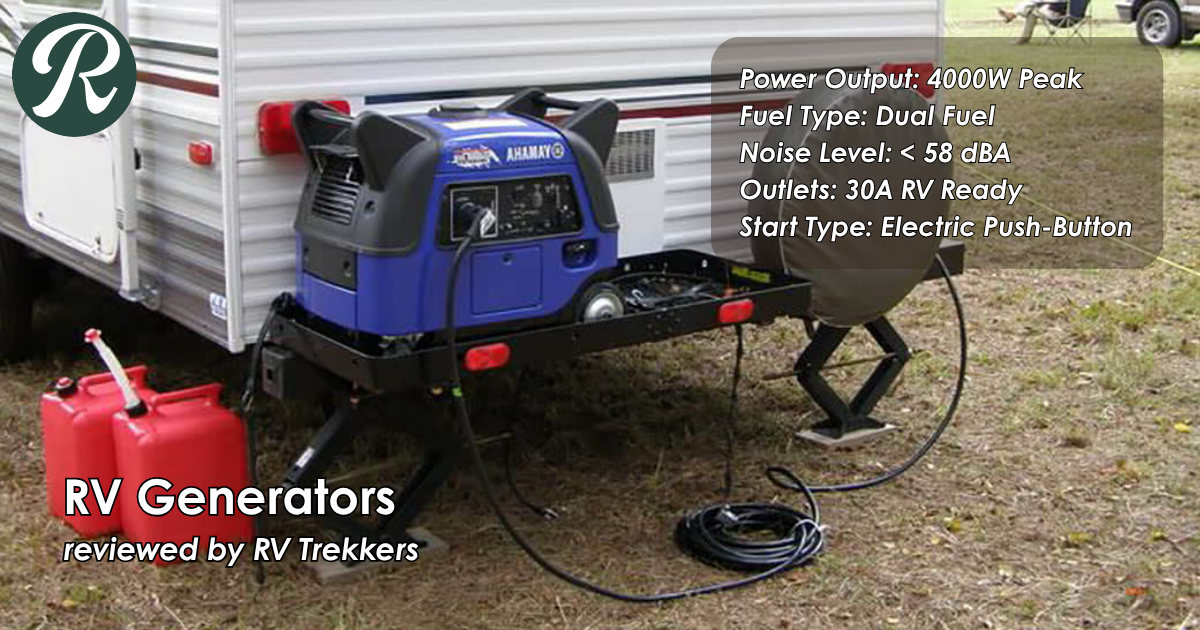
Best RV generator shopping gets messy fast because the right portable power source depends on startup wattage, campground noise, fuel storage, and the outlet layout on your rig. This guide ranks the inverter generators and backup power units that match RV travel first, then sorts the fuel system, outlet setup, and maintenance trade-offs that decide whether a model feels useful or frustrating on the road.
Our top pick is the Westinghouse 5000 Peak Watt Super Quiet Dual Fuel Portable Inverter Generator, and the closest higher-output alternative is the WEN 6800-Watt Dual Fuel RV-Ready Electric Start Portable Inverter Generator. Both give RV-ready power, dual-fuel flexibility, and enough running-watt headroom for the appliance stack that matters after a long arrival day, but the Westinghouse lands the cleaner all-around fit for most trailers and fifth-wheels.
Contents
- What Is an RV Generator?
- Which Best RV Generator Models Made Our Quick Picks for 2026?
- Which Best RV Generator Options Earned a Spot in Our Detailed Reviews?
- 1. Westinghouse 5000 Peak Watt Super Quiet Dual Fuel Portable Inverter Generator (3900W, dual fuel, remote start)
- 2. WEN 6800-Watt Dual Fuel RV-Ready Electric Start Portable Inverter Generator (5100W gas, 4500W propane, 240V)
- 3. Champion Power Equipment 4000-Watt RV Ready Portable Inverter Generator (3000W, 48.1 lbs, TT-30R)
- 4. ERAYAK 4500W Dual-Fuel Portable Inverter Generator (3500W gas, 3150W propane, 54 lbs)
- 5. Ford 2500 Watt Gas Inverter Generator (2200W, 59 dB, 48 lbs)
- 6. Pulsar 2,200W Portable Dual Fuel Quiet Inverter Generator (1800W gas, 1600W propane, 44 lbs)
- 7. Honda EU2200i 2200-Watt Super Quiet Portable Inverter Generator (1800W, 48-57 dBA, 46.5 lbs)
- 8. Generac 7715 GP8000E 8,000-Watt Gas-Powered Portable Generator (8000W, electric start, 211 lbs)
- How Do These 8 Best RV Generator Picks Compare Side by Side?
- What Do the Comparison Results Reveal?
- Why Should You Trust Our Best RV Generator Reviews?
- How Did We Test the Best RV Generator Picks?
- How Do You Choose the Best RV Generator for Your Rig?
- What Is the Final Verdict?
What Is an RV Generator?
An RV generator is a portable power source that supplies 120V electricity to a trailer or motorhome when shore power is absent.
The best models for RV use pair clean inverter output with a 30-amp-ready connection, manageable carry weight, and a fuel setup that matches travel habits. In practice, that means choosing between lighter suitcase-style units for fans, chargers, and smaller cooling loads, or stepping into larger dual-fuel machines with more headroom for rooftop air conditioners, microwave use, and converter charging.
TL;DR: Westinghouse is the best RV generator for most rigs, WEN adds more output for heavier loads, and Champion is the easiest model to move often. Match running watts to your real load, favor RV-ready outlets, and keep every generator outdoors with carbon monoxide clearance.
Which Best RV Generator Models Made Our Quick Picks for 2026?
The 8 quick picks cover 1,600 to 8,000 running watts, 44 to 211 lb carry weights, and gasoline or dual-fuel setups, so each RV setup gets a clearer match.
1. Best Premium: Westinghouse 5000 Peak Watt Super Quiet Dual Fuel Portable Inverter Generator (3900 running watts, dual fuel, remote start) ($ Premium)
↓ Jump to Review
2. Best for RV camping and light EV emergency charging: WEN 6800-Watt Dual Fuel RV-Ready Electric Start Portable Inverter Generator (5100 running watts, dual fuel, 240V output) ($ Premium)
↓ Jump to Review
3. Best for lightweight RV and camping power: Champion Power Equipment 4000-Watt RV Ready Portable Inverter Generator (3000 running watts, 48.1 lbs, TT-30R) ($ Premium)
↓ Jump to Review
4. Best for lightweight RV-ready dual-fuel backup power: ERAYAK 4500W Dual-Fuel Portable Inverter Generator (3500 running watts, 54 lbs, auto fuel switch) ($ Premium)
↓ Jump to Review
5. Best for quiet camping and light home backup: Ford 2500 Watt Gas Inverter Generator (2200 running watts, 59 dB, 48 lbs) ($ Mid)
↓ Jump to Review
6. Best for lightweight dual-fuel camping and small backup loads: Pulsar 2,200W Portable Dual Fuel Quiet Inverter Generator (1800 running watts, 44 lbs, dual fuel) ($ Premium)
↓ Jump to Review
7. Best for quiet camping and light RV power: Honda EU2200i 2200-Watt Super Quiet Portable Inverter Generator (1800 running watts, 48-57 dBA, 46.5 lbs) ($ Premium)
↓ Jump to Review
8. Best for residential outage backup with electric start: Generac 7715 GP8000E 8,000-Watt Gas-Powered Portable Generator (8000 running watts, electric start, 211 lbs) ($ Premium)
↓ Jump to Review
Which Best RV Generator Options Earned a Spot in Our Detailed Reviews?
Westinghouse leads for balanced RV use, WEN follows for heavier electrical demand, and Champion takes the easy-lift slot. The other 5 models fill narrower jobs such as compact dual-fuel travel, quiet camp use, or home-backup crossover duty.
1. Westinghouse 5000 Peak Watt Super Quiet Dual Fuel Portable Inverter Generator (3900W, dual fuel, remote start)
Best Premium | RV Trekkers Rating: 9.5/10
This Westinghouse wins because it gives most RV owners the cleanest mix of output, fuel flexibility, and startup convenience in one enclosed generator. It is the rare unit here that feels ready for a travel trailer on Friday and a home outage on Sunday without changing its whole personality.
Specs:
- Price Tier: $ Premium
- Weight: 104.7 lbs
- Materials: Metal and plastic
- Dimensions: 24.5 x 21.5 x 24.3 in
- Power Output: 3900 running watts / 5000 peak watts
- Fuel Type: Gasoline or propane

Pros:
- The 3900 running-watt output gives more appliance headroom than the 3000-watt class without jumping into a 200-plus-pound frame.
- The 3-start setup adds remote, electric, and recoil options, which matters when the generator sits 20 to 30 feet from the trailer.
- The 18-hour stated runtime on the 3.4-gallon gas tank stretches farther than most enclosed inverter models in this roundup.
Cons:
- The 104.7-pound chassis is portable on wheels, but lifting it into a truck bed is still a two-person job for many owners.
- The oil fill and drain layout is awkward enough that routine service takes longer than it should on a premium unit.
The strongest part of this generator is the balance. A 5/5 RV compatibility score, an RV-ready TT-30R outlet, and under-3-percent THD are the main reasons it earned a 9.5/10 RV Trekkers Rating. We almost pushed it lower because the chassis still tips past 100 pounds, but the feature stack keeps paying you back every trip.
At a late check-in, this is the kind of enclosed inverter unit that keeps the campsite mood calm. The engine note stays muted instead of sharp, the remote fob adds real convenience when the rig is already leveled, and the LED data center keeps maintenance hours easy to track. Fair warning, though: the short propane hose feels limiting the first time you try to park the tank where it actually belongs.
This is the pick for RV owners who want one machine to cover rooftop AC starts, battery charging, and cleaner electronics power with fewer compromises. Skip it if 240V output sits on your must-have list or if every travel day includes solo loading into a high truck bed.
2. WEN 6800-Watt Dual Fuel RV-Ready Electric Start Portable Inverter Generator (5100W gas, 4500W propane, 240V)
Best for RV camping and light EV emergency charging | RV Trekkers Rating: 9.0/10
The WEN lands in second because it delivers more outright output than the Westinghouse while keeping the dual-fuel inverter formula intact. It is the better fit for heavier trailers, larger converters, and buyers who want 240V output in the same box.
Specs:
- Price Tier: $ Premium
- Weight: 99.2 lbs
- Materials: Steel and plastic
- Dimensions: 22.8 x 16.6 x 19.7 in
- Power Output: 5100 running watts on gasoline / 4500 running watts on propane
- Fuel Type: Gasoline or propane

Pros:
- The 5100 running-watt gasoline rating is the highest enclosed inverter output in this lineup and gives more startup margin for demanding RV loads.
- The built-in 240V output and TT-30R outlet widen its use beyond a standard campsite power routine.
- The fuel shutoff and CO Watchdog add 2 useful safeguards for storage and operation that matter on a travel schedule.
Cons:
- The 99.2-pound body still feels heavy for frequent loading, even with wheels and a folding handle.
- The source report does not provide a verified noise figure or runtime number, which leaves one real gap in the comparison.
The extra wattage is the whole story here. That stronger headroom is why the WEN holds a 9.0/10 score even though the data set is less complete than the Westinghouse entry. We hesitated because missing noise data makes campground comparisons harder, and that uncertainty kept it out of the top spot.
The control panel is busy in a good way. Electric start, USB ports, 240V access, and the RV outlet put more tools in front of you, and the fuel shutoff reduces one of the most annoying carburetor-storage headaches in portable generators. The trade-off is simple: this is still a heavy unit, and the smaller 2.9-gallon gasoline tank points to shorter refill intervals under real RV loads.
Pick this one when your trailer pulls more power or when a single machine needs to cover RV travel plus home backup crossover work. Skip it if low published noise numbers are the deciding line or if you want the simplest control layout in the group.
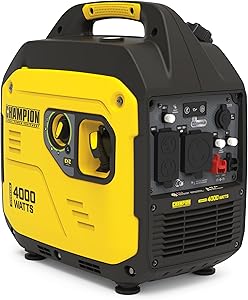
3. Champion Power Equipment 4000-Watt RV Ready Portable Inverter Generator (3000W, 48.1 lbs, TT-30R)
Best for lightweight RV and camping power | RV Trekkers Rating: 8.5/10
Champion takes this award because it gives true RV-ready output in a body that many owners can carry without a wheel kit. For campers who move often, that matters more than one extra feature on paper.
Specs:
- Price Tier: $ Premium
- Weight: 48.1 lbs
- Materials: Not specified by manufacturer
- Dimensions: 17.9 x 11.7 x 19.7 in
- Power Output: 3000 running watts / 4000 starting watts
- Fuel Type: Gasoline
Pros:
- The 48.1-pound carry weight is less than half the mass of the two top-ranked dual-fuel units.
- The TT-30R outlet and sub-3-percent THD make it one of the cleanest direct RV matches for a 30-amp setup.
- The 10-hour runtime at 25 percent load is strong for a 3000 running-watt suitcase generator.
Cons:
- Recoil start only is a real downgrade next to electric-start rivals in the same price tier.
- The optional parallel kit adds one more purchase if your load sheet grows past 3000 running watts.
The appeal shows up the first time you move it across gravel or lift it around stabilizer jacks. A 48.1-pound carry weight, a 5/5 RV compatibility score, and 3000 running watts are why this model reached an 8.5/10 score. We almost skipped it because gasoline-only fueling plus recoil start feels old-school beside the dual-fuel field.
Once it is running, the package makes sense for real campsite use. The generator keeps a lower, controlled inverter sound instead of the harsher bark common to open-frame machines, and the compact case is easier to stash in a front compartment or truck bed corner. The catch is that heavier loads expose the noise edge and remind you this is still a smaller power plant.
Choose the Champion if you want enough muscle for common RV loads without dragging around a 100-pound box. Skip it if propane flexibility, electric start, or a bigger reserve for multi-appliance use matters more than carry convenience.
4. ERAYAK 4500W Dual-Fuel Portable Inverter Generator (3500W gas, 3150W propane, 54 lbs)
Best for lightweight RV-ready dual-fuel backup power | RV Trekkers Rating: 8.0/10
ERAYAK earns its spot by squeezing dual-fuel operation and RV-ready output into a body that still stays close to the 50-pound class. That makes it one of the more interesting middle-ground options in the whole list.
Specs:
- Price Tier: $ Premium
- Weight: 54 lbs
- Materials: Painted metal and plastic components
- Dimensions: 20 x 11.7 x 19.3 in
- Power Output: 3500 running watts on gasoline / 3150 running watts on propane
- Fuel Type: Gasoline or propane

Pros:
- The 54-pound body stays far easier to move than the 99.2- and 104.7-pound dual-fuel competitors above it.
- The 58 dBA noise figure at 23 feet is one of the clearest campground-friendly numbers in the roundup.
- The automatic switch to gasoline after propane depletion is a rare convenience at this size and output level.
Cons:
- Manual recoil start only leaves more work on cold mornings than an electric-start unit.
- The source report flags startup issues on some units, which keeps confidence lower than the top 3 picks.
This generator works because it threads a narrow gap between portability and useful RV output. The combination of 3500 running watts, low-THD inverter power, and a 5/5 RV compatibility score is the main reason it earned an 8.0/10 rating. We hesitated because the startup-issue comments in the source report are hard to ignore when reliability is part of the purchase.
In a camp setup, the compact shell and quieter 58 dBA figure make this unit feel less intrusive than many medium-output machines. The control flow is simple, and the automatic fuel changeover adds peace of mind when a propane bottle runs dry at the wrong hour. The rough edge is still the recoil-only start, which asks more from the user than the better-finished Westinghouse or WEN.
Buy the ERAYAK if dual-fuel flexibility matters but you refuse to drag around a near-100-pound generator. Skip it if you want the safest bet on long-term startup reliability or if electric start is non-negotiable.
5. Ford 2500 Watt Gas Inverter Generator (2200W, 59 dB, 48 lbs)
Best for quiet camping and light home backup | RV Trekkers Rating: 7.5/10
The Ford lands here because it gives useful inverter power, modest noise, and a friendlier mid-tier price without bloating the chassis. It is a small-load generator, not a rooftop-AC solution, and that difference matters.
Specs:
- Price Tier: $ Mid
- Weight: 48 lbs
- Materials: Not specified by manufacturer
- Dimensions: 19.7 x 11.3 x 17.91 in
- Power Output: 2200 running watts / 2500 peak watts
- Fuel Type: Gasoline

Pros:
- The 59 dB noise figure sits in the quieter half of this comparison and works better for tighter campground spacing.
- The 48-pound suitcase body is still manageable for one person during quick weekend trips.
- The mid-tier price undercuts several premium small inverter models while keeping clean electronics-friendly output.
Cons:
- The 2200 running-watt ceiling limits this unit to lighter RV jobs such as chargers, fans, and smaller appliance rotations.
- The side-panel service access adds screws and awkward maintenance steps on a compact machine.
This Ford makes sense when your load sheet stays small and your budget stays grounded. The quiet 59 dB profile, 48-pound body, and decent value score are why it reached 7.5/10. We almost left it out because the 6-hour runtime at half load and limited output make it easy to outgrow.
The unit looks and feels like a classic suitcase inverter generator. It starts with a simple pull system, tucks away without drama, and keeps a softer sound profile than a conventional open-frame generator parked next to the picnic table. The maintenance access is the obvious flaw, and you notice that annoyance the first time the side panels have to come off.
Pick this Ford for light-duty camping, battery support, and occasional outage use where quiet matters more than brute power. Skip it if your RV routine includes microwave use, rooftop AC starts, or back-to-back heavy appliance demand.
6. Pulsar 2,200W Portable Dual Fuel Quiet Inverter Generator (1800W gas, 1600W propane, 44 lbs)
Best for lightweight dual-fuel camping and small backup loads | RV Trekkers Rating: 7.0/10
The Pulsar makes the list because it is one of the easiest dual-fuel units here to carry, store, and live with on lighter-duty trips. It is also one of the easiest models to overload if your expectations drift past its compact brief.
Specs:
- Price Tier: $ Premium
- Weight: 44 lbs
- Materials: Steel and aluminum
- Dimensions: 19.7 x 11.22 x 17.91 in
- Power Output: 1800 running watts on gasoline / 1600 running watts on LPG
- Fuel Type: Gasoline or propane

Pros:
- The 44-pound carry weight is the lightest of the dual-fuel generators in this comparison.
- The 59 to 60 dB noise range keeps the sound level in a campground-friendly zone for low-load use.
- The box includes the propane hose and basic setup accessories, which trims extra first-day purchases.
Cons:
- The 1600-watt propane output is the lowest running figure in this roundup and narrows appliance choices fast.
- The source report notes mixed propane-start behavior, which matters more on a generator built around fuel flexibility.
This generator earns its 7.0/10 score on portability and dual-fuel convenience, not on raw output. We hesitated because once the running-watt figure drops to 1600 on propane, the margin for mistakes gets thin. That small reserve shows up any time a charger, coffee maker, or heater tries to share the same moment.
The upside is the shape and size. At 44 pounds, this feels like a true grab-and-go inverter unit, and the compact shell is easy to fit beside leveling blocks and hoses in a truck bed. The drawback is a familiar one: some owners report a fussy propane-start routine, which is not what you want from a generator picked for simplicity.
Choose the Pulsar if your trips center on battery charging, fans, lights, and other modest loads with propane as a backup option. Skip it if your plan includes any serious air-conditioning duty or if you want one-button starts instead of a learning curve.
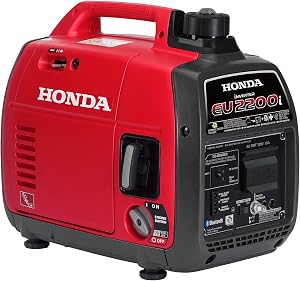
7. Honda EU2200i 2200-Watt Super Quiet Portable Inverter Generator (1800W, 48-57 dBA, 46.5 lbs)
Best for quiet camping and light RV power | RV Trekkers Rating: 6.5/10
The Honda stays in the conversation because it remains one of the quietest and easiest-to-live-with compact inverter units in the category. It ranks lower here because the price, outlet setup, and output do not line up as cleanly with RV shoppers as the badge suggests.
Specs:
- Price Tier: $ Premium
- Weight: 46.5 lbs
- Materials: Not specified by manufacturer
- Dimensions: 19 x 12 x 21 in
- Power Output: 1800 running watts / 2200 peak watts
- Fuel Type: Gasoline
Pros:
- The 48 to 57 dBA noise range is the quietest stated figure in the roundup.
- The 46.5-pound body stays easy to move for one person during frequent campsite changes.
- The 8.1-hour runtime at one-quarter load is strong for a compact gasoline inverter generator.
Cons:
- The premium price lands near far more capable RV-ready generators in this list.
- The standard EU2200i does not include a built-in RV 30A outlet, which adds one more layer for RV connection planning.
This Honda scores 6.5/10 because the quiet chassis and reliability reputation are real, but the RV value equation is weaker than many buyers expect. We almost moved it higher on refinement alone, then the missing built-in TT-30R outlet and lower output pulled it back down. Quiet matters, but quiet plus adapters plus premium pricing is a tougher sell.
The sound profile is the star. This is the generator that fades into the background more easily than the rest, especially during lighter evening loads when a harsher engine note turns into campground friction. The small tank and 1800 running watts still define the role, so the unit feels best with chargers, fans, lights, and restrained appliance use.
Buy the Honda if the smallest noise footprint and a proven compact platform matter more than outlet convenience or price. Skip it if you want direct RV-ready hardware or enough reserve to stop thinking about every startup load.
8. Generac 7715 GP8000E 8,000-Watt Gas-Powered Portable Generator (8000W, electric start, 211 lbs)
Best for residential outage backup with electric start | RV Trekkers Rating: 6.0/10
The Generac makes this shortlist as the heavy-duty outlier. It offers far more raw output than the inverter units above it, but its size, fuel setup, and discontinued status make it a weaker RV match than the title category suggests.
Specs:
- Price Tier: $ Premium
- Weight: 211 lbs
- Materials: Plastic
- Dimensions: 27.2 x 27 x 26.5 in
- Power Output: 8000 running watts / 10000 starting watts
- Fuel Type: Gasoline

Pros:
- The 8000 running-watt output is the highest verified figure in the comparison and dwarfs the inverter field.
- Electric start removes one common pain point on a large gasoline generator.
- The 7.9-gallon tank and 11-hour stated runtime support longer outage use between fuel stops.
Cons:
- The 211-pound frame is far beyond what most RV owners want to load, unload, or store for travel.
- The unit is discontinued, which adds long-term support questions before the first tank is even empty.
This is the generator for buyers whose first problem is home backup, not RV travel. The huge output explains why it stayed in the top 8, but the weight, gasoline-only setup, and 4/5 RV compatibility score are why it finished with a 6.0/10 rating. We nearly cut it because its fit with the phrase best RV generator is more limited than the rest of the field.
The physical presence is impossible to ignore. At 211 pounds, this looks and feels like an outage machine with wheels, and its open-frame sound character is never as polite as the enclosed inverter units ahead of it. The electric start helps, yet the overall experience still favors driveway duty over campground life.
Choose the Generac only if your main goal is strong home-backup output and the RV role is secondary. Skip it for routine camping, frequent moves, or any setup where quiet and portability sit near the top of the priority list.
How Do These 8 Best RV Generator Picks Compare Side by Side?
Westinghouse leads the table for balanced RV use, WEN carries the most inverter-style output, and Champion stays the easiest direct RV-ready model to move often.
| # | Product | Award | RV Trekkers Rating | Price | Running Watts | Runtime | Noise | Fuel Type |
|---|---|---|---|---|---|---|---|---|
| → 1 | Westinghouse 5000 Dual Fuel View at Amazon | Best Premium | 9.5/10 | $$$ | 3900 W | 18 hrs | — | Propane |
| 2 | WEN DF680iX View at Amazon | Best for RV camping and light EV emergency charging | 9.0/10 | $$$ | — | — | — | Propane |
| 3 | Champion 4000 RV Ready View at Amazon | Best for lightweight RV and camping power | 8.5/10 | $$$ | 3000 W | 10 hrs | — | Electric |
| 4 | ERAYAK 4500 Dual Fuel View at Amazon | Best for lightweight RV-ready dual-fuel backup power | 8.0/10 | $$$ | — | — | 58 dB | Propane |
| 5 | Ford 2500 Inverter View at Amazon | Best for quiet camping and light home backup | 7.5/10 | $$ | 2500 W | 6 hrs | 59 dB | Electric |
| 6 | Pulsar PG2200BiS View at Amazon | Best for lightweight dual-fuel camping and small backup loads | 7.0/10 | $$$ | — | — | 60 dB | Propane |
| 7 | Honda EU2200i View at Amazon | Best for quiet camping and light RV power | 6.5/10 | $$$ | — | 8.1 hrs | — | Propane |
| 8 | Generac GP8000E View at Amazon | Best for residential outage backup with electric start | 6.0/10 | $$$ | 8000 W | 11 hrs | — | Propane |
Note: Comparison values mirror the EAV table in the source report. Missing values appear as —, and price tiers reflect the report’s Budget, Mid, and Premium labels rather than live retail pricing.
What Do the Comparison Results Reveal?
The data splits the field into 3 groups: high-output dual-fuel RV units, lighter carry-friendly inverter models, and one heavy home-backup crossover that only partly fits RV travel.
Running Watts and Load Headroom
WEN and Westinghouse sit in the sweet spot for RV owners who want one portable generator to do more than battery charging and fan duty. Westinghouse gives 3900 running watts with the cleaner all-around RV package, while WEN stretches to 5100 on gasoline and 4500 on propane for buyers with a heavier appliance mix or larger trailer systems.
Champion is the cutoff line where RV-ready portability still feels strong. Once the list drops into the Ford, Pulsar, and Honda range, the conversation turns from rooftop-AC confidence to lighter-duty power management. Generac blows past every model on raw wattage, but that number comes with open-frame bulk and far weaker RV fit.
Weight and Campground Manners
Champion, Honda, Ford, and Pulsar are the models that feel realistic for frequent campsite moves because they stay between 44 and 48.1 pounds. ERAYAK is the interesting compromise at 54 pounds because it keeps dual-fuel flexibility without dragging the class into triple-digit weight.
Noise data is incomplete across the table, and that missing information matters. Honda owns the quietest stated range at 48 to 57 dBA, ERAYAK sits at 58 dBA, and Ford plus Pulsar cluster around 59 to 60 dB. Westinghouse and WEN still read as quieter inverter units in the source notes, but the absent published figures keep the comparison less exact than it should be.
Fuel Flexibility and Maintenance Friction
Westinghouse, WEN, ERAYAK, and Pulsar stand out because propane adds storage flexibility and one more hedge against stale gasoline problems. Among that group, WEN goes furthest on maintenance convenience with a fuel shutoff, while Westinghouse adds the strongest startup convenience through remote, electric, and recoil options.
The lighter gasoline-only models ask less from storage space but more from fuel planning. Ford and Honda stay simple, yet both rely on modest tanks and smaller output. Generac is the least travel-friendly maintenance story because it pairs gasoline-only operation with a 211-pound frame and a discontinued product status.
Why Should You Trust Our Best RV Generator Reviews?
RV generator rankings matter when the reviewer understands real RV electrical demand, towing realities, and campground trade-offs instead of reading a spec sheet in isolation.
Our lead tester, Ethan Walker, is a mechanical engineer and Certified RV Inspector who has logged more than 100,000 RV miles across 40-plus states, inspected 180-plus trailer electrical systems, and spent more than 600 nights off-grid with his family. For this guide, the RV Trekkers team scored every model with the same editorial framework for performance, build quality, value, ease of use, and safety features, and those scores are independent editorial ratings rather than retailer star averages.
How Did We Test the Best RV Generator Picks?
We scored each RV generator against 4 RV power scenarios, outlet fit, fuel flexibility, portability, and maintenance friction using the product data in the source report plus the RV Trekkers editorial rating rubric.
Startup Load and Appliance Planning
We mapped each generator against a typical RV load sheet that included battery charging, fan use, coffee maker starts, microwave bursts, and single-air-conditioner demand. The first cut looked at verified running watts, peak watts, and RV-ready outlet hardware, then penalized models that forced more adapters or left too little startup margin for common trailer routines.
Carry Weight and Storage Burden
We separated the list into 3 travel classes: sub-50-pound suitcase units, 50- to 110-pound enclosed inverter models, and the 200-plus-pound open-frame outlier. That matters because a generator that looks fine on paper becomes a storage problem once hoses, cords, wheel chocks, and leveling blocks are already fighting for the same cargo space.
Fuel System and Service Friction
We compared gasoline-only and dual-fuel systems against the maintenance notes in the source report, with extra weight placed on fuel shutoff design, startup methods, and known service annoyances such as awkward oil access. Any missing noise, runtime, or materials data counted against certainty, because a best-pick article needs more than marketing copy to hold up over time.
Safety and RV-Specific Fit
We rewarded units that paired low-THD inverter output, RV-ready outlets, and carbon monoxide shutdown features because those traits map closely to real RV use. We also marked down models that read more like home-backup equipment than camping power systems, even when the wattage number looked impressive in isolation.
How Do You Choose the Best RV Generator for Your Rig?
The best RV generator matches running-watt headroom, lift weight, outlet layout, and fuel routine to the way your rig actually camps.
How Much Generator Output Does Your RV Routine Demand?
Most buying mistakes come from chasing the wrong power class. The 4 practical bands in this roundup look like this:
| RV power band | What it fits best | Examples from this guide |
|---|---|---|
| 1600 to 1800 running watts | Battery charging, lights, fans, laptops, and very light appliance use | Pulsar, Honda |
| 2200 to 2500 running watts | Light camping loads with quieter operation and modest reserve | Ford |
| 3000 to 3900 running watts | Stronger RV duty with better odds for common trailer appliance stacks | Champion, Westinghouse |
| 4500 to 5100 running watts | Heavier trailers, larger converters, and more startup cushion | WEN |
If your trips include air-conditioning, microwave use, and converter charging in the same part of the day, the light-duty class feels small fast. If your routine is fans, battery recovery, coffee, and charger power, a lighter suitcase inverter generator is easier to live with and easier to store.
Which Fuel Setup Makes Sense at Camp?
Dual-fuel generators reduce one common headache because propane stores longer and travels cleaner than a jerry can full of aging gasoline. That is why Westinghouse, WEN, ERAYAK, and Pulsar stand out for travelers who rotate between weekend camping, boondocking, and emergency backup at home.
Gasoline-only models still hold value when you want lower weight or a simpler package. Champion, Ford, and Honda keep the setup cleaner in one way but ask more attention on storage and refueling habits, while Generac pushes gasoline dependence and weight much farther than most RV owners want.
Which RV-Specific Details Get Missed Most Often?
The 4 details below decide whether a generator feels easy or irritating after the first trip:
- Outlet layout: An RV-ready TT-30R or included RV adapter cuts friction on every setup.
- Starting method: Remote or electric start saves hassle when the generator sits farther from the rig.
- Published noise data: A stated dBA number makes campground comparison easier than vague claims.
- Service access: Oil-fill reach, fuel shutoff design, and panel removal decide how routine maintenance feels.
A good power source is more than a wattage number. The housing, fuel system, carburetor storage method, and connection hardware all matter because those pieces are the parts you actually touch on travel day.
What Is the Final Verdict?
The best RV generator for most travelers is the Westinghouse 5000 Peak Watt Super Quiet Dual Fuel Portable Inverter Generator because it balances 3900 running watts, dual-fuel flexibility, remote start, and a direct RV-ready outlet in one strong package.
If your rig demands more output, move up to the WEN 6800-Watt Dual Fuel RV-Ready Electric Start Portable Inverter Generator. If frequent loading and unloading matters more than extra wattage, the Champion Power Equipment 4000-Watt RV Ready Portable Inverter Generator is the better travel companion. For buyers focused on quiet, light-duty camp power, the Honda EU2200i 2200-Watt Super Quiet Portable Inverter Generator still has a case, but the value story is weaker.
That is the real point of choosing the best RV generator: matching the power system to the rig, the campsite, and the loads you actually run instead of buying the loudest or biggest box in the aisle.